



- Super recognizers outperform trained border officials at detecting morphed passport photos.
- A 2022 study found border officers accepted one in three morphed images.
- Super recognizers use different visual strategies, not just better ones.
Frøy Løvåsdal had spent years matching faces at the Norwegian National Police Directorate when she agreed to test what super recognizers could really do.
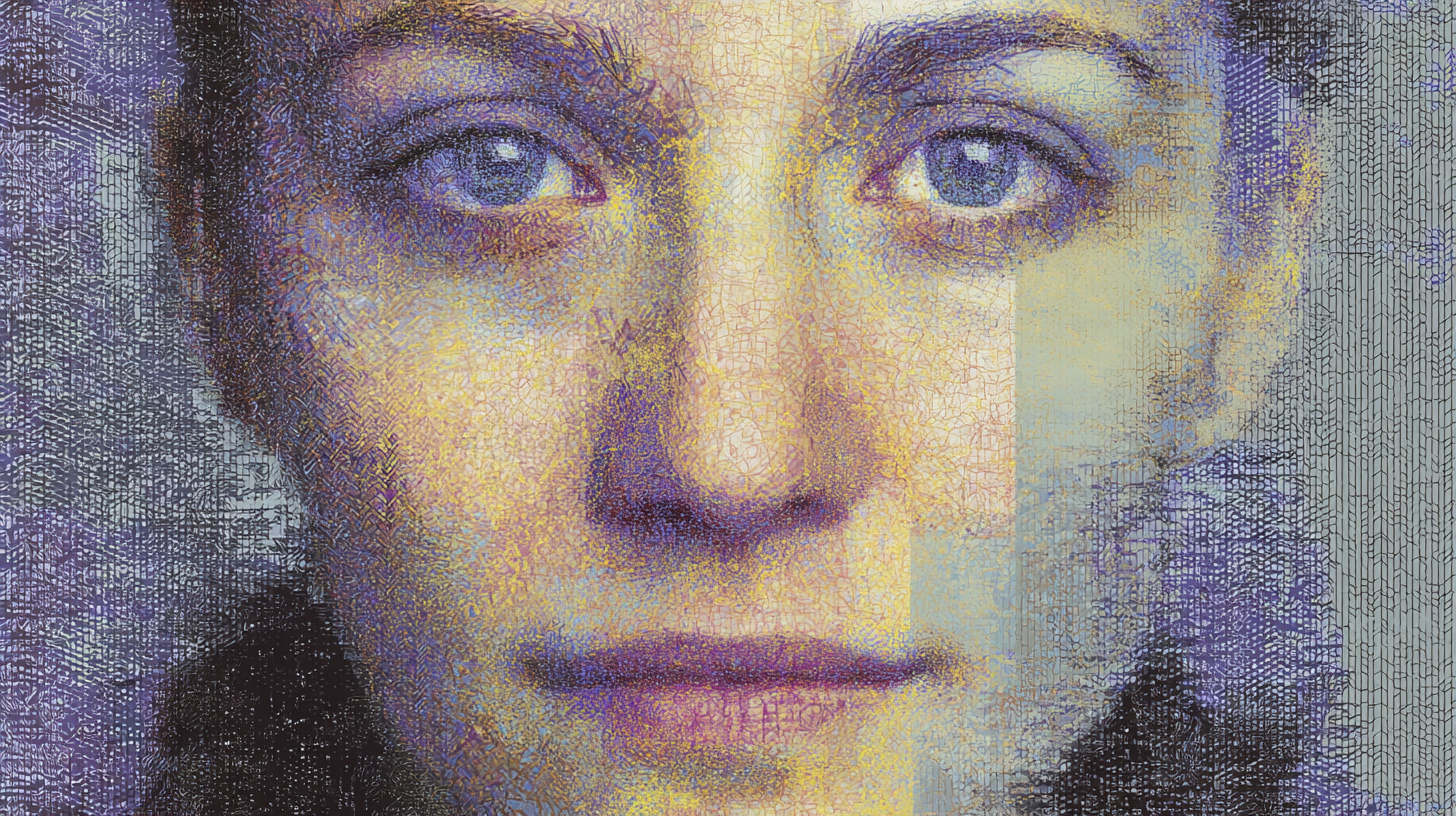
The question was whether people with extraordinary facial memory could spot a different kind of fraud: passport photos digitally blended from two faces.
This fraud technique, called morphing, lets two individuals travel on the same document. The vulnerability has been known for years, but the true scale of the problem remains difficult to quantify.
Key figure
1 in 3
Morphed passport photos accepted by trained border control officers, 2022 study
When Two Faces Become One Passport
A morphed passport photo combines two facial photographs into a single composite. Done well, the result fools both automated recognition systems and trained human inspectors working side by side.
In many European countries, applicants still provide their own passport photos, and that loophole turned morphing from a theoretical concern into a practical security problem.
What is passport morphing?
Passport morphing blends two facial photographs into a single composite image. The result resembles both contributors strongly enough to pass automated and human checks at border control.
A 2022 study quantified the damage: professional border control officers accepted nearly a third of the morphed images they examined. The people failing were not casual observers, but trained professionals working at checkpoints every day.
Super Recognizers Look Smarter, Not Harder
About 2 per cent of the population are super recognizers, individuals whose facial memory and matching ability places them far outside normal range.
The trait was identified roughly fifteen years ago, and police forces moved quickly to exploit it. London’s Metropolitan Police deployed 20 super recognizers after the 2011 riots.
Working through surveillance footage and archived mugshots, they identified over 600 perpetrators. More than 70 per cent of those identified were later convicted. Germany, Austria, Australia, the United States, and Switzerland have since established or consulted similar units.
More On Cybercrime

Dark Web Criminals Betray Themselves Through Unusual Words and Phrases
An unusual greeting identified a dark web administrator. Forensic linguists use identity clues to hunt anonymous criminals.
→Løvåsdal, now pursuing her doctorate at NTNU’s Norwegian Biometrics Laboratory under professor Christoph Busch, co-authored a 2025 study in Applied Cognitive Psychology testing whether this advantage extended to a task most participants had never formally practised: detecting digitally manipulated passport photos.
The margin was clear.
Super recognizers significantly outperformed controls at detecting morphed images. They also proved more reliable at confirming that unmanipulated photographs were genuine, a second finding that surprised even Busch. These individuals were not only sharper at catching fakes; they were also less likely to flag authentic documents.
The really good morphed images are almost impossible to detect, both for humans and for the algorithms we currently have. Fortunately, it looks like training helps.
Frøy Løvåsdal, Norwegian National Police Directorate
What Their Eyes Actually Do
A separate study from UNSW Sydney, published in Proceedings of the Royal Society B in November 2025, used eye-tracking technology to map where super recognizers focus when examining faces. They lock onto the most diagnostically valuable regions of a face, not simply more of it.
When researchers fed their gaze patterns into nine deep neural networks trained on facial recognition, every network achieved higher accuracy at matching faces than when guided by typical viewing patterns. Lead author James Dunn at UNSW offered a succinct explanation: these individuals look smarter, not harder.
Løvåsdal’s team at NTNU is running parallel eye-tracking experiments, seeking to map what super recognizers attend to when examining manipulated images specifically. The practical goal is training protocols for border officials who lack exceptional natural ability but face the same detection challenges daily.
Training Closes the Gap
Updated: A December 2025 study from the University of Reading tested whether brief instruction could sharpen detection of AI-generated faces. Five minutes on common rendering errors raised accuracy from 41 to 64 per cent for super recognizers, and from 31 to 51 per cent for typical observers.
The improvement was roughly equal in both groups, which carries a specific implication. Super recognizers appear to use different visual strategies, not simply better versions of the same ones. Understanding those strategies, rather than trying to replicate them directly, could reshape how border agencies design their training programmes.
Participants in Løvåsdal and Busch’s morphing study showed the same pattern. Their detection accuracy improved simply by completing the experimental tasks, with no formal training programme involved.
Exposure, structure, and guided practice narrow the gap between exceptional and ordinary perception.
Sources
- Primary Source: The Super-Recogniser Advantage Extends to the Detection of Digitally Manipulated Faces (Applied Cognitive Psychology, 2025)
- Additional Context:
- Super-recognizers (Norwegian SciTech News)
- Super-recognizers sample visual information of superior computational value (Proceedings of the Royal Society B, 2025)
- Training human super-recognizers' detection of AI-generated faces (Royal Society Open Science, 2025)

Fact Check: Claim-by-Claim Verification Verified
The article accurately reports findings from peer-reviewed studies on super-recognizers' superior detection of morphed and manipulated passport photos, with correct details on performance advantages, eye-tracking insights, training effects, and historical context.
Commentary
- Primary study authors are Davis et al., not solely Løvåsdal (co-author via NTNU affiliation), but article appropriately credits her role and quotes accurately [1][3][1].
- December 2025 University of Reading study on AI faces (not morphs) matches details; training from brief instructions .
- Prevalence of manipulations low in real-world (task used 25-50%), but findings ecologically relevant [1].
Sources used for verification
Academic/Peer-reviewed:
- The Super-Recogniser Advantage Extends to the Detection of Digitally Manipulated Faces - Wiley [1]
- Super-recognizers sample visual information of superior computational value - royalsocietypublishing.org
- Training human super-recognizers' detection and discrimination of AI-generated faces - royalsocietypublishing.org
Other reliable sources:
- Super-recognizers - norwegianscitechnews.com [3]
- The science behind people who never forget a face - unsw.edu.au
- They never forget a face: Super-recognisers can reveal identity fraud - sciencenorway.no [9]
Fact-checked by Perplexity Sonar Pro on 2026-03-09


