Physics

Wave Refraction: How Depth Steers Ocean Waves Toward Shore
Wave refraction is the bending of ocean waves as they move into shallower water, reshaping coastlines by concentrating energy on headlands.

Rayleigh Scattering: Why the Sky Is Blue and Sunsets Are Red
Rayleigh scattering is the elastic scattering of light by molecules smaller than its wavelength, explaining blue skies, red sunsets, and fiber-optic signal loss.

Vortex Shedding: How Fluid Flow Creates Oscillating Forces
Vortex shedding is the periodic release of alternating vortices from a bluff body in fluid flow, producing oscillating forces in the body's wake.

Joule-Thomson Effect: Why Most Gases Cool on Expansion
The Joule-Thomson effect is the temperature change when a real gas expands through a valve at constant enthalpy, with no heat exchange.

Metamaterial Cloaking Technology: The Science of Invisibility
Metamaterial cloaking technology uses engineered materials to guide electromagnetic waves around objects, rendering them undetectable. From the 2006 first cloak to current research.

Lichtenberg Figures: From Lightning Scars to Laser Printers
Lichtenberg figures are branching, tree-like shapes produced when high-voltage electrical discharges spread across or through an insulating material.

Nuclear Fusion Reactor Designs: Types, Progress, and Timeline
Nuclear fusion reactor designs are the engineering systems built to confine plasma hot enough for atomic nuclei to fuse and release energy.

Uranium Decay Series: The 14 Steps from Uranium to Lead
The uranium decay series is the chain of 14 radioactive transformations through which uranium-238 converts into stable lead-206.

Jet Propulsion: How Thrust Powers Flight and Space Travel
Jet propulsion generates forward thrust by expelling mass in the opposite direction, applying Newton's third law of motion.
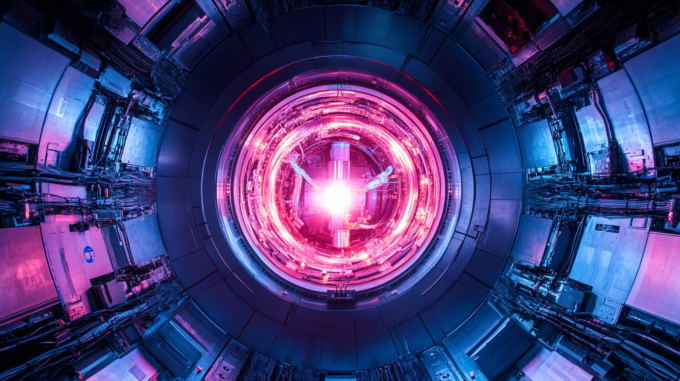
Fusion Energy Confinement: How Plasma Is Held for Power
Fusion energy confinement methods hold plasma at extreme temperatures long enough for atomic nuclei to fuse, using magnetic fields or rapid compression to...