




- AI deepfakes crossed the indistinguishable threshold for ordinary viewers in 2025.
- Voice cloning now needs just seconds of audio to fool most people.
- Real-time deepfake synthesis for live video calls is expected by 2026.
Siwei Lyu spends his days helping journalists spot fakes. The University at Buffalo computer scientist runs a media forensics lab that routinely debunks AI deepfakes for news organizations worldwide.
His job just got much harder.
Over the course of 2025, AI-generated faces, voices, and full-body performances crossed what Lyu calls a critical threshold.
For ordinary viewers watching video calls or social media clips, synthetic media became indistinguishable from authentic recordings.
Key figure
8 million
Online deepfakes in 2025, up from 500,000 in 2023
How Voice Cloning Changed Everything
The surge was not accidental. Three developments converged to make synthetic people nearly perfect.

AI deepfakes are becoming too real to distinguish from actual humans. Voice cloning and animation techniques help scammers make copies of real people. (Science Reader)
First, video generation models learned temporal consistency. The flicker and warping around eyes and jawlines that once betrayed deepfakes disappeared.
These models now separate identity from motion, allowing the same face to perform any action convincingly.
Second, voice cloning crossed what Lyu describes as the "indistinguishable threshold." A few seconds of audio now produces a clone complete with natural intonation, rhythm, pauses, and breathing sounds.
Some major retailers report receiving over 1,000 AI-generated scam calls daily.
What is temporal consistency?
In video, temporal consistency means each frame follows logically from the last. Early deepfakes flickered because AI struggled to maintain stable faces across time. New models track identity and motion separately, eliminating the telltale distortions.
Third, consumer tools pushed the technical barrier to near zero. OpenAI's Sora 2, Google's Veo 3, and a wave of startups mean anyone can describe an idea, draft a script with ChatGPT, and generate polished video in minutes.
What Comes Next
The trajectory for 2026 is clear. Deepfakes are moving toward real-time synthesis.
Lyu expects entire video-call participants to be synthesized live. Interactive AI-driven actors whose faces, voices, and mannerisms adapt instantly to conversation. Scammers deploying responsive avatars rather than pre-recorded clips.
The shift is from static visual realism to behavioral coherence.
Identity modeling is converging into unified systems that capture not just how a person looks, but how they move, sound, and speak across contexts.
Beyond Human Judgment
More Fake AI
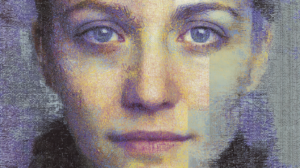
Super Recognizers Detect Fake Passport Photos Others Miss
Super recognizers outperform trained border officers at detecting morphed passport photos. New research shows their visual strategies could reshape security training.
→Human perception can no longer serve as the primary defense. The gap between synthetic and authentic media continues to narrow.
The meaningful line of defense will shift to infrastructure. Lyu points to cryptographic signing, Coalition for Content Provenance and Authenticity specifications, and multimodal forensic tools like his lab's Deepfake-o-Meter.
Simply looking harder at pixels will no longer work.
When synthetic people can react to you in real time, the old detection methods collapse entirely.
Sources
- Primary Source: Deepfakes leveled up in 2025: Here's what's coming next (The Conversation)
- Additional Context:
- Siwei Lyu Faculty Profile (University at Buffalo)

Fact Check: Claim-by-Claim Verification Verified
The article accurately summarizes Siwei Lyu's original piece in The Conversation and supports its claims with matching data from reliable sources on deepfake growth, technical advances, and expert predictions.
Commentary
- "Indistinguishable threshold" and "critical threshold" phrasing aligns closely with Lyu's article and 2025 studies but reflects interpretive summary rather than direct quote.
- Predictions for 2026 real-time deepfakes are forward-looking opinions from Lyu, appropriately hedged as expectations.
- Deepfake volume figures from industry reports (e.g., DeepStrike); no peer-reviewed contradiction found.
Sources used for verification
Academic/Peer-reviewed:
- DeepFake-O-Meter v2.0: An Open Platform for Deepfake Detection - arXiv
- Reduced Spatial Dependency for More General Video-level Deepfake Detection - arXiv
- Deepfake defense: Combining spatial and temporal cues with CNN - PMC
Other reliable sources:
- Deepfakes leveled up in 2025: Here's what's coming next - buffalo.edu
- Siwei Lyu, PhD - Center for Information Integrity - buffalo.edu
- DeepFake O'Meter - buffalo.edu
- Sora 2 is here - openai.com
- Deepfake Statistics 2025 - deepstrike.io
- Deepfakes flood retailers ahead of peak holiday shopping - axios.com
Fact-checked by Perplexity Sonar Pro on 2026-02-15


