Gel Electrophoresis: How Scientists Sort Molecules by Size
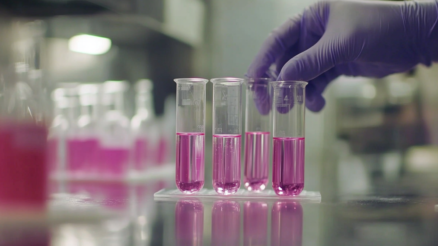
Gel electrophoresis separates DNA, RNA, and proteins by pulling them through a porous gel with an electric field, sorting molecules by size.


35 glossary terms
Chemistry is the study of how matter rearranges itself. Materials science pushes that study one step further: once you know how molecules behave, what can you build from them? The terms in this section cover reactions and their mechanisms, the periodic table's elements and their families, and the modern engineered materials that rely on precise chemical control. You will find fundamentals such as catalytic converters and titration curves alongside more specialized ideas like yttrium applications or X-ray crystallography. These are the concepts that let chemistry move from the lab bench into batteries, pharmaceuticals, and everything in between.
Gel electrophoresis separates DNA, RNA, and proteins by pulling them through a porous gel with an electric field, sorting molecules by size.
Free radical chemistry studies highly reactive atoms and molecules with unpaired electrons, central to processes from industrial plastics to cellular aging.
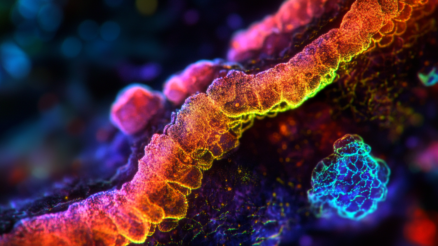
Fluorophore imaging techniques use fluorescent molecules to make specific biological structures visible under a microscope, letting researchers track proteins, cells, and molecular interactions in living tissue.
Fluorescence microscopy uses fluorescent molecules to label and visualize specific structures inside biological specimens.
Ferromagnetism is a property of certain materials, most notably iron, cobalt, and nickel, that causes their atomic magnetic moments to align spontaneously, producing a strong net magnetic field.
Enzyme kinetics models are mathematical descriptions of how fast enzyme-catalyzed reactions proceed, linking reaction rate to substrate and enzyme concentrations.
Cryo-electron microscopy (cryo-EM) images biological molecules frozen in vitreous ice, preserving their natural shape and producing 3D structures at near-atomic resolution.
A catalytic converter uses platinum, palladium, and rhodium to transform toxic exhaust gases into less harmful emissions through oxidation and reduction reactions.
Carbon dating accuracy measures how closely radiocarbon dates match a sample's true age, expressed as a calendar-year range with a stated margin of error.
Calorimetry is the measurement of heat absorbed or released during chemical reactions, physical changes, or phase transitions, using an insulated device called a calorimeter.