Aerogel Insulation Properties: The Science of Frozen Smoke
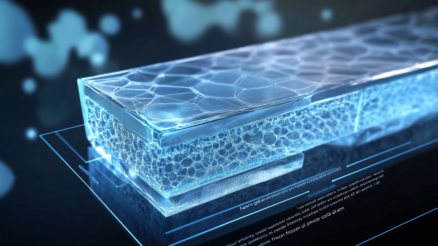
Aerogel insulation properties describe the thermal performance of aerogels, ultralight solids up to 99.8% air that rank among the best insulators known to science.


35 glossary terms
Chemistry is the study of how matter rearranges itself. Materials science pushes that study one step further: once you know how molecules behave, what can you build from them? The terms in this section cover reactions and their mechanisms, the periodic table's elements and their families, and the modern engineered materials that rely on precise chemical control. You will find fundamentals such as catalytic converters and titration curves alongside more specialized ideas like yttrium applications or X-ray crystallography. These are the concepts that let chemistry move from the lab bench into batteries, pharmaceuticals, and everything in between.
Aerogel insulation properties describe the thermal performance of aerogels, ultralight solids up to 99.8% air that rank among the best insulators known to science.
An acid-base titration curve plots pH against titrant volume during a neutralization reaction, revealing the equivalence point, buffer regions, and acid strength of the analyte.
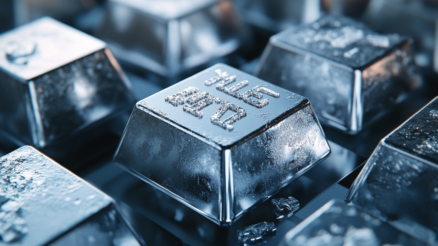
Yttrium applications refer to the various uses of yttrium, a silvery-metallic element, in diverse fields such as electronics, materials science, and medicine.
Xanthan gum is a polysaccharide used as a food additive and rheology modifier, commonly employed as a thickening and stabilizing agent in various industries.
Volatile Organic Compound Detection involves identifying and measuring VOCs, which are organic chemicals that evaporate easily at room temperature and impact air quality and health.
Valence electron configuration is the arrangement of electrons in the outermost shell of an atom, crucial for determining chemical properties and reactivity.
Thermal expansion is the tendency of matter to change in volume in response to a change in temperature.
Taq polymerase is a thermostable enzyme crucial for PCR, derived from Thermus aquaticus, allowing DNA amplification through repeated thermal cycles.
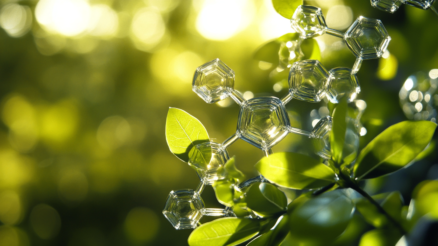
Synthetic photosynthesis is a chemical process that mimics natural photosynthesis to convert sunlight, water, and carbon dioxide into energy, typically in the form of hydrogen or other fuels.
Redox reactions, short for reduction-oxidation reactions, are chemical processes in which the oxidation state of atoms is changed due to the transfer of electrons between substances.