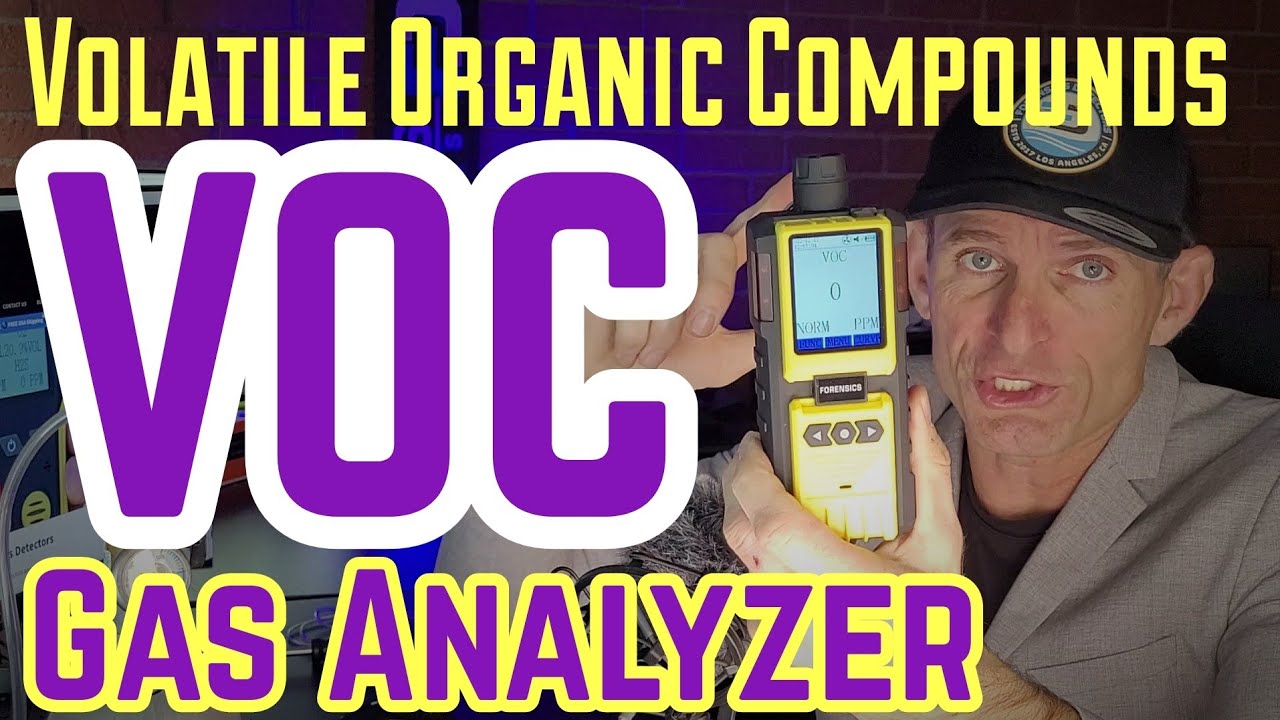
Definition
Volatile Organic Compound Detection refers to the process of identifying and measuring volatile organic compounds (VOCs) in various environments. VOCs are organic chemicals that easily evaporate at room temperature, contributing to air pollution and health risks.
Etymology
The term "volatile" comes from the Latin word "volatilis," meaning "fleeting" or "transitory," while "organic" is derived from "organicus," indicating relation to living organisms. "Compound" originates from the Latin "componere," meaning "to put together." Detection comes from "detegere," meaning "to uncover."
Example usage
'The laboratory specializes in volatile organic compound detection to ensure air quality compliance.'
Interesting fact
The detection of VOCs is crucial in space missions. The International Space Station uses specialized equipment to monitor VOC levels, ensuring astronaut safety. (NASA)
Explanation and detail
What are Volatile Organic Compounds?
Volatile Organic Compounds (VOCs) are a group of carbon-based chemicals that are emitted as gases from certain solids or liquids. They include a wide range of chemicals, some of which may have short- and long-term adverse health effects.
Importance of Detection
Detecting VOCs is vital for environmental monitoring, industrial safety, and public health. High levels of VOCs can contribute to air pollution, forming ground-level ozone and smog. They are also linked to health issues such as respiratory problems and headaches.
Methods of Detection
- Gas Chromatography: A technique used to separate and analyze compounds that can be vaporized. It is often used in labs for precise VOC detection.
- Mass Spectrometry: When combined with gas chromatography, it provides detailed information about the molecular structure of VOCs.
- Photoionization Detectors (PIDs): These are portable devices that use ultraviolet light to detect VOCs in the air.
Related video