Space and astronomy
Space and astronomy stories from NASA, ESA, and observatories worldwide. Exoplanets, black holes, dark matter, and the search for life beyond Earth.
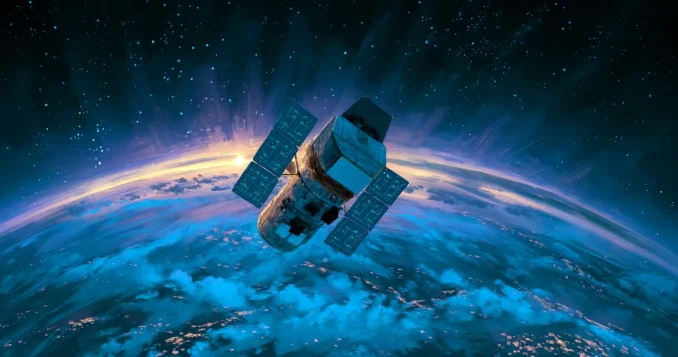
After 1,700 Autonomous Decisions, NASA's Swift telescope is coming down
NASA's gamma-ray observatory deorbits in October after a commercial rescue failed, ending a 20-year unacknowledged experiment in machine judgment that preceded the public...

Artemis II Flew on AI, but Came Home on Engineering
The Artemis II mission flew on autonomous AI systems, but the crew's survival depended on engineers solving a heat shield flaw by hand.

3I/ATLAS: The Interstellar Comet That Defied Expectations
An interstellar comet with CO2 ratios 60 times higher than anything in our solar system. 3I/ATLAS didn't just visit. It rewrote the chemistry.

Space Exploration: From Our Moon to the Edge of the Solar System
Space exploration has transformed from Cold War ambition into a global scientific enterprise. From Mars rovers to interstellar probes, here is what we...

How The James Webb Space Telescope Was Designed For Survival
Mark Clampin spent fifteen years as JWST's project scientist. In a Royal Institution lecture, he explains the 250 single-point failures the telescope had...

Why Identical Protoplanetary Discs Create Different Planets
Protoplanetary discs produce vastly different planets depending on UV exposure timing. One million years of shielding creates Earth instead of Moon-sized worlds.

Cloud-9: The Failed Dark Matter Galaxy
Astronomers have found the first confirmed "failed galaxy" - a dark matter cloud that never formed stars. Here are 5 things to know...

CRASH Clock: How Fast Can Space Turn Deadly Without Warnings?
If satellites lose tracking ability during a solar storm, researchers calculate a catastrophic collision could happen in under three days.

Exoplanet Carbon Atmosphere Defies All Formation Theories
Webb observed a lemon-shaped world with pure molecular carbon in its atmosphere. No known process can explain how it formed.

Did Mars Once Have a Tropical Climate With Millions of Years of Rainfall?
Light-colored rocks discovered by NASA's Perseverance rover suggest the Red Planet was far wetter than scientists imagined.