- Mars had liquid water for millions of years and may hold evidence of past life
- JWST is rewriting textbooks on galaxies, exoplanets, and stellar nurseries
- Two interstellar objects have passed through our solar system since 2017
In 1977, two spacecraft left Earth with no return ticket. Nearly half a century later, Voyager 1 is still transmitting from interstellar space, more than 15 billion miles away. Its survival is not just an engineering triumph.
It is a reminder that space exploration produces discoveries no one planned for, answers questions no one thought to ask, and routinely humbles the species that launched the mission in the first place.
Today, space exploration spans continents and budgets. NASA rovers drill into Martian rock, while the Artemis missions are taking us back to the Moon.
The James Webb Space Telescope peers back to the first galaxies. Commercial rockets land themselves on barges. And the questions have only grown larger: Is there life beyond Earth? Can humans survive on other worlds? What happens when our orbital neighborhood fills with debris?
Key figure
15.5 billion miles
The distance Voyager 1 has traveled from Earth, making it the most distant human-made object in existence. A signal from the spacecraft takes over 22 hours to reach us.
Mars: the planet we know best
No other world has received as much scientific attention as Mars. Multiple rovers, landers, and orbiters have mapped its surface, sampled its atmosphere, and searched for signs of ancient water. The evidence is now overwhelming: Mars once had a tropical climate with millions of years of rainfall, rivers, and lakes.
The question is whether that wet past also supported life. A Mars lake may hide signs of ancient life, but not where scientists originally expected. The clues are subtle: mineral deposits, organic molecules, and chemical signatures that could have biological origins or could be purely geological. Some researchers push the idea further, arguing that life on Earth may have actually begun on Mars, carried here by meteorite impacts billions of years ago.
Mars also raises practical questions about humanity's future off-world. The Moon may beat Mars as our first terraforming target, given its proximity and lower mission complexity. But Mars, with its thin atmosphere and frozen water reserves, remains the long-term prize.
Why do we keep sending rovers to Mars?
Mars is the most Earth-like planet in our solar system. It has seasons, polar ice caps, weather, and a 24.6-hour day. More importantly, it clearly had liquid water on its surface for hundreds of millions of years, making it the best candidate for finding evidence of past extraterrestrial life. Each mission builds on the last: mapping the surface, analyzing rocks, and caching samples for eventual return to Earth.
Telescopes and the deep universe
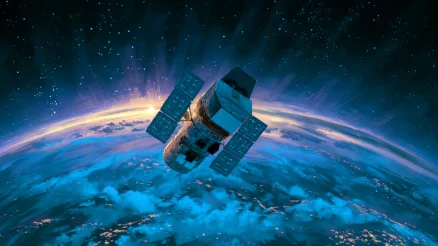
Space telescopes have transformed our understanding of the cosmos more than any other instrument. The James Webb Space Telescope was designed for survival in one of the most hostile environments imaginable, orbiting 1.5 million kilometers from Earth at the L2 Lagrange point. Its infrared instruments have already rewritten textbooks on galaxy formation, exoplanet atmospheres, and stellar nurseries.
Webb's discoveries keep challenging expectations. An exoplanet's carbon atmosphere defies all formation theories, suggesting planetary science still has fundamental gaps. And light echoes captured by JWST appear to outrun themselves, an optical illusion that reveals the geometry of interstellar dust in stunning detail.
Meanwhile, ground-based and radio telescopes continue to deliver surprises. A radio signal that pulses every 22 minutes defies all known models of stellar behavior. Identical light pulses from three different stars remain unexplained. And a distant "odd radio circle" is rewriting galaxy evolution theory.
The solar system up close
How did the planets form? The gas giants arrived first, and their gravitational influence shaped everything that followed. But the details are still emerging. Why identical protoplanetary discs create different planets turns out to depend on ultraviolet shielding, a factor no one anticipated.
Do other planets have seasons? Yes, but Earth's are unusually stable, thanks to the Moon's gravitational steadying of our axial tilt. Why some planets have moons and others don't remains a question that touches on everything from collision history to tidal forces.

How did planets form? The gas giants arrived first, here represented by Jupiter and it's moon Europa. (Science Reader)
Some of the most exciting discoveries come from the outer solar system. Saturn's moon Enceladus hides complex organic chemistry in ice plumes, making it one of the most promising places to search for present-day extraterrestrial life. And the birthday paradox on Pluto illustrates just how alien time feels at the edge of the solar system, where a single year lasts 248 Earth years.
Interstellar visitors and voyages
In 2017, astronomers spotted the first confirmed object from another star system passing through our own. 'Oumuamua changed everything about how we think about interstellar material. Its strange shape, unexpected acceleration, and lack of a cometary tail sparked theories ranging from hydrogen iceberg to alien light sail.
A second interstellar visitor, 3I/ATLAS, arrived with nickel but no iron, deepening the mystery of what other star systems are made of.
Sending our own probes to other stars remains a grand challenge. TARS, a solar sling concept, could launch interstellar probes using the Sun's own gravity and radiation pressure. And Voyager 1's ongoing survival at over 15 billion miles demonstrates that spacecraft can endure far longer than their designers imagined, even when aliens might be eavesdropping on our signals.
Space debris and orbital risk
The more we launch, the more dangerous space becomes. The CRASH Clock measures how fast orbital space could turn deadly without better tracking and warnings. Thousands of defunct satellites, rocket stages, and collision fragments now orbit Earth, threatening active missions and future launches. The problem is accelerating: each collision creates more debris, which creates more collisions.
Stars and stellar mysteries
Stars are the engines of the universe, and they keep surprising us. A new largest star was identified in 2025, displacing the previous record holder. When will Betelgeuse explode? Astronomers now have better estimates, but the red supergiant remains unpredictable.
Some stellar phenomena have no explanation at all. A 22-minute radio pulse from a suspected magnetar breaks the known rules of stellar physics. Northern lights on a rogue planet wandering through interstellar space show that auroras don't require a parent star. And a jazz guitarist reinvented the search for micrometeorites, finding cosmic dust on rooftops that professional scientists had overlooked for decades.
The search for life
The search for extraterrestrial life has shifted from speculation to systematic science. Frank Drake's equation gave the search its mathematical framework, even if the variables remain uncertain. Today, the search spans multiple approaches: analyzing exoplanet atmospheres for biosignatures, listening for radio signals, and probing the ice moons of our own solar system.
Harvard scientists have created self-reproducing cells from scratch, demonstrating that life-like behavior can emerge from non-biological chemistry.
If life can arise that easily in a lab, the odds of it arising independently elsewhere in the universe look considerably better.
Space exploration on Science Reader
We cover space exploration as missions launch, data arrives, and theories evolve. Here are some of our articles:
- Artemis II Flew on AI, but Came Home on Engineering: About the untested heat shield on the Orion capsule which heightened tensions before reentry.
- Voyager 1 Light Day: NASA's 15-Billion-Mile Computer Repair: How engineers fixed a spacecraft older than the internet from 15 billion miles away.
- How the James Webb Space Telescope Was Designed for Survival: The engineering behind the most powerful space telescope ever built.
- 'Oumuamua: The Interstellar Object That Changed Everything: The first confirmed visitor from another star system.
- Did Mars Once Have a Tropical Climate?: Evidence for millions of years of rainfall on the Red Planet.
- How Did Planets Form? The Gas Giants Arrived First: The story of planetary formation from dust to worlds.
- CRASH Clock: How Fast Can Space Turn Deadly?: The growing risk of orbital debris and what it means for spaceflight.
- When Will Betelgeuse Explode?: What astronomers actually know about the red supergiant's future.
- Saturn's Moon Hides Complex Organic Chemistry in Ice Plumes: Enceladus as a candidate for present-day extraterrestrial life.
- TARS: The Solar Sling That Could Launch Interstellar Probes: A concept for reaching other star systems.
- Frank Drake's Orchid and the Search for Life Beyond Earth: The equation that framed humanity's greatest question.
- Space Exploration's Robot-Human Partnership Takes Shape: Why the future of exploration is neither purely human nor purely robotic.
- There's a New Largest Star in the Universe: The 2025 discovery that displaced the previous record holder.
- Interstellar Object 3I/ATLAS Has Nickel but No Iron: What a visitor from another star system tells us about alien chemistry.
- Dyson Swarm Could Harvest the Sun in 31 Years: The math behind the most ambitious energy project ever proposed.
From the Science Reader Glossary
- Exoplanet Transit Method | Lagrange Points | Keplerian Orbital Mechanics
- Oort Cloud Comets | Jupiter's Great Red Spot | Fermi Paradox
- Gravitational Lensing | Radioisotope Thermoelectric Generators | Doppler Effect
- White Dwarf Stars | Supernova Remnants | Interstellar Medium
FAQ
What is space exploration?
Space exploration is the investigation of outer space using telescopes, robotic spacecraft, and crewed missions. It includes studying planets, moons, stars, and other objects in our solar system and beyond, as well as developing the technology needed to reach them.
Is there life on Mars?
No life has been confirmed on Mars. However, multiple missions have found evidence that Mars once had liquid water, organic molecules, and conditions that could have supported microbial life. NASA's Perseverance rover is currently caching rock samples for eventual return to Earth, where they can be tested with lab equipment far more sensitive than anything a rover can carry.
What has the James Webb Space Telescope discovered?
JWST has discovered galaxies that formed far earlier than expected after the Big Bang, analyzed the atmospheres of exoplanets for the first time in detail, captured new views of stellar nurseries and protoplanetary discs, and found chemical compositions that challenge existing models of planet formation.
How far has Voyager 1 traveled?
Voyager 1 is more than 15.5 billion miles (25 billion kilometers) from Earth, making it the most distant human-made object. It crossed into interstellar space in 2012 and continues to send data back, though its signal takes over 22 hours to reach Earth.