- Transit photometry detects exoplanets by measuring dips in starlight.
- About 70% of all confirmed exoplanets were found this way.
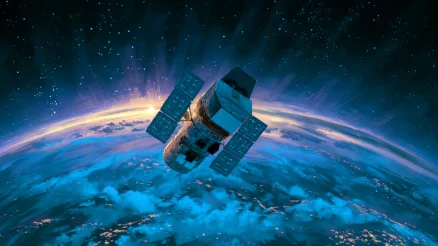
- Kepler, TESS, and PLATO are the major transit survey missions.
The exoplanet transit method is a technique for detecting planets outside our solar system by measuring the small, periodic dip in a star's brightness that occurs when a planet passes between the star and the observer.
Why it matters
Key figure
~70%
Share of all confirmed exoplanets discovered via transit photometry
The transit method has reshaped astronomy's understanding of planetary systems. Before its first successful application in 1999, astronomers had confirmed fewer than 20 exoplanets, all found through radial velocity measurements of stellar wobble. By March 2026, the NASA Exoplanet Archive lists over 6,200 confirmed exoplanets, and roughly 70% were discovered using the transit method.
Transit observations do more than count planets. When starlight filters through a transiting planet's atmosphere, spectrographs can identify molecules in the atmosphere, a technique called transmission spectroscopy. NASA's James Webb Space Telescope has used this approach to detect water vapor, carbon dioxide, and sulfur dioxide in the atmospheres of distant worlds. The method connects directly to the question of whether gas giants shape the habitable zones where Earth-like planets might survive.
How it works
A transit occurs when a planet's orbit carries it across the face of its host star as seen from Earth. The planet blocks a fraction of the star's light, typically between 0.01% and 1%, producing a measurable dip in a plot of brightness over time called a light curve. The depth of the dip reveals the planet's size relative to the star. A Jupiter-sized planet orbiting a Sun-like star blocks about 1% of the light. An Earth-sized planet blocks roughly 0.008%.
Key figure
0.008%
Light blocked by an Earth-sized planet transiting a Sun-like star
The duration of the dip indicates the planet's orbital speed, and the interval between successive dips gives the orbital period. From the period, astronomers calculate the planet's distance from its star using Kepler's third law. At least three transits are typically required to confirm a detection and rule out instrument noise or other astrophysical signals such as eclipsing binary stars.
The method has a geometric limitation: transits are only visible when a planet's orbit is aligned nearly edge-on to the observer's line of sight. For a planet at Earth's distance from a Sun-like star, the probability of alignment is about 0.5%. This means transit surveys must monitor large numbers of stars to find planets. NASA's Kepler mission observed roughly 150,000 stars simultaneously for this reason.
Key context
The first transit detection. In November 1999, two teams independently observed the transit of HD 209458b, a hot Jupiter orbiting its star every 3.5 days. David Charbonneau and Timothy Brown used a ground-based 10-centimeter telescope at the Fred Lawrence Whipple Observatory, while Gregory Henry used an automated photometric telescope at Fairborn Observatory. The planet had already been detected by radial velocity, but the transit observation confirmed its physical size and proved the method worked.
From Kepler to TESS to PLATO. NASA's Kepler space telescope, launched in March 2009, stared at a single patch of sky in the constellation Cygnus for four years and discovered over 2,600 confirmed planets. Its successor, the Transiting Exoplanet Survey Satellite (TESS), launched in April 2018, surveys nearly the entire sky and focuses on bright, nearby stars. ESA's PLATO mission, scheduled for launch in 2026, will search for rocky planets in the habitable zones of Sun-like stars with enough precision to measure their masses and ages.
FAQ
What is the difference between the transit method and the radial velocity method?
The transit method measures dips in a star's brightness when a planet crosses in front of it, revealing the planet's size. The radial velocity method measures wobbles in a star's motion caused by a planet's gravitational pull, revealing the planet's mass. Used together, the two methods give both size and mass, which allows astronomers to calculate density.
Can the transit method detect Earth-like planets?
Yes, but it requires extreme precision. An Earth-sized planet dims a Sun-like star by only 0.008%, near the detection limit of most instruments. NASA's Kepler mission achieved this precision and found Kepler-186f in 2014, the first Earth-sized planet confirmed in a star's habitable zone.
Why does the transit method miss most planets?
Transits are only visible when a planet's orbit is aligned nearly edge-on to the observer. For a planet at Earth's distance from a Sun-like star, the chance of alignment is about 0.5%. Most planetary systems are tilted at angles that prevent transits from being observed from Earth.
What can astronomers learn from a transit besides planet size?
During a transit, starlight passing through a planet's atmosphere absorbs at wavelengths specific to the molecules present. This transmission spectroscopy has identified water vapor, carbon dioxide, and sulfur dioxide in exoplanet atmospheres. The timing of transits also reveals orbital period and distance from the star.
Related Reading


Sources
- Primary: Transit Method (NASA Science, Roman Space Telescope)
- Primary: Transit Photometry as an Exoplanet Discovery Method (Deeg & Alonso, 2018, Handbook of Exoplanets)
- Additional:
- Transiting Planet Resources (NASA Exoplanet Archive, Caltech/IPAC)
- Down in Front!: The Transit Photometry Method (The Planetary Society)
- Explained: Transiting Exoplanets (MIT News)

Fact Check: Claim-by-Claim Verification Verified
All major claims verified against NASA, Caltech/IPAC Exoplanet Archive, and peer-reviewed literature. Key statistics on discovery counts, mission dates, and transit geometry confirmed.
Sources used for verification
- Transit Method - NASA Science - nasa.gov
- Transiting Planet Resources - caltech.edu
- Deeg & Alonso 2018 - arxiv.org
- Explained: Transiting Exoplanets - mit.edu
- The Transit Photometry Method - planetary.org