exoplanet

Yellow Dwarf Stars: Traits, Lifespan, and Habitability
Yellow dwarf stars are G-type main-sequence stars with surface temperatures of 5,200 to 6,000 K. The Sun is the best-known example.

Gravitational Lensing: How Gravity Bends Light in Space
Gravitational lensing is the bending of light by gravity, turning massive objects into natural telescopes that reveal the hidden structure of the universe.

Exoplanet Transit Method: Finding Worlds by Starlight
The exoplanet transit method detects planets beyond our solar system by measuring the small, periodic dip in starlight when a planet crosses in...

Fermi Paradox: Why the Universe Stays Silent
The Fermi Paradox is the tension between the apparent likelihood of extraterrestrial civilizations and the complete absence of evidence for them.

Doppler Effect: How Astronomers Measure Cosmic Motion
The Doppler effect in astronomy is the shift in wavelength or frequency of light from a celestial object caused by its motion relative...

Exoplanet Carbon Atmosphere Defies All Formation Theories
Webb observed a lemon-shaped world with pure molecular carbon in its atmosphere. No known process can explain how it formed.
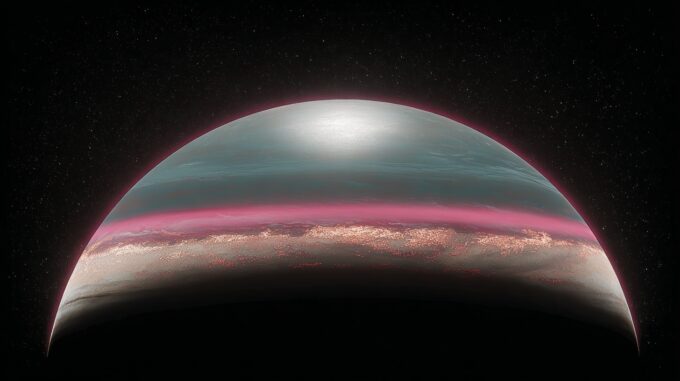
Northern lights spotted on wandering rogue planet
Astronomers have detected Northern Lights on a rogue planet floating alone in space, complete with sand clouds and copper-melting temperatures.