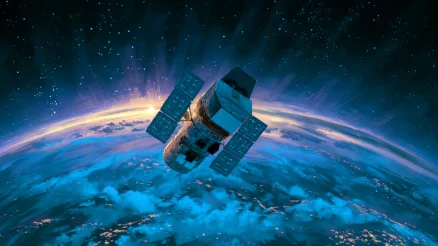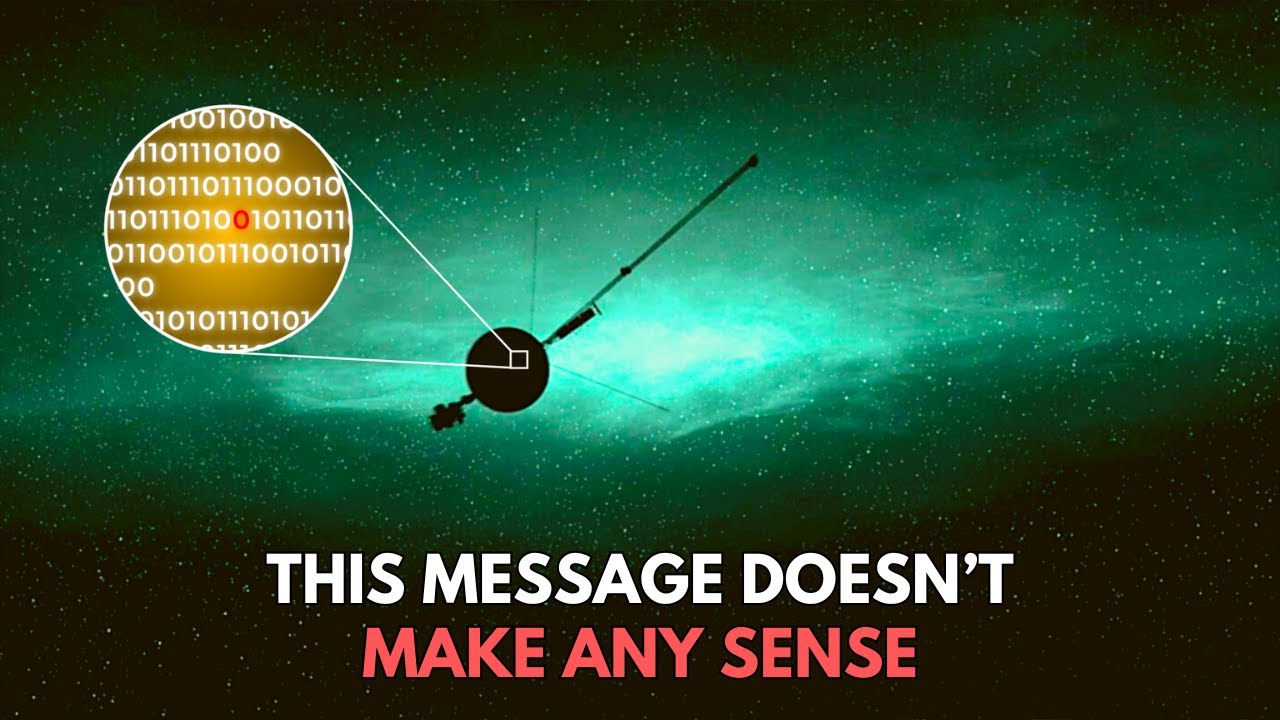

- A single corrupted chip caused Voyager 1 to send gibberish for five months.
- Engineers relocated code into spare memory after deleting old Jupiter routines.
- All four remaining science instruments resumed transmitting by June 2024.
Suzy Dodd's team at NASA's Jet Propulsion Laboratory sent the fix on a Thursday and waited two days for an answer.
The command had to travel 15 billion miles to reach Voyager 1, now approaching one light day from Earth. Then the spacecraft needed to process it and send a response across the same distance. Forty-five hours, round trip, at the speed of light.
Key figure
68 kilobytes
Total memory in Voyager 1's flight data computer, less than a single modern photo
A Chip Fails 24 Billion Kilometers from Home
Five months earlier, in November 2023, Voyager 1 had stopped making sense. The probe, which crossed into interstellar space in 2012, began transmitting a repeating pattern of ones and zeros that carried no usable data.
The problem traced to the flight data subsystem, one of three onboard computers. The FDS gathers readings from science instruments and health sensors, packages them into a single stream, and passes it to the radio system for transmission home. When the FDS fails, the radio keeps working. It just has nothing coherent to say.
What is the flight data subsystem?
Voyager 1 carries three onboard computers built in the 1970s. The flight data subsystem (FDS) collects science and engineering data, combines it, and passes the package to the telemetry unit for radio transmission to Earth. With just 68 kilobytes of total memory, the FDS processes about 8,000 instructions per second. A modern smartphone handles roughly 100 billion.
In March 2024, engineers sent a "poke" command prompting the FDS to read out its own memory. A Deep Space Network engineer decoded the returning signal and confirmed that about 3% of the memory had been corrupted. A single chip had failed, likely from a cosmic ray strike or simple wear after 46 years.
Nobody could replace it. The spacecraft was too far away for that.
Deleting Jupiter to Save the Mission
Dodd's team at JPL devised a workaround that required a kind of digital surgery. They would relocate the corrupted code to spare corners of the FDS memory. But no single block was large enough to hold it all.
So the engineers sliced the code into fragments and tucked them into unused memory wherever space existed. They deleted routines the spacecraft no longer needed, including software from its 1979 Jupiter flyby, to clear room. Every adjustment required that 45-hour round-trip wait.
On April 18, 2024, they transmitted the first batch of relocated code.
Two days later, engineering data came through clearly for the first time in five months. The team at JPL gathered in a conference room to watch the signal resolve.
By June, all four remaining science instruments were transmitting again.
Approaching a Light-Day from Home
Voyager 1 keeps moving. In November 2026, it will become the first human-made object to reach one light day from Earth, a distance of 25.9 billion kilometers. A command sent on Monday morning will not get a response until Wednesday.
More On Interstellar Probes
TARS: The Solar Sling That Could Launch Interstellar Probes
David Kipping's TARS stores solar energy as spin, then flings a microchip probe beyond the solar system. No lasers, no fuel, just sunlight.
→The probe has weathered more than the FDS crisis. In October 2024, its X-band radio transmitter shut down after a fault protection trigger, and engineers restored it within weeks. In May 2025, they revived backup attitude-control thrusters dormant since 2004.
Communication itself has grown harder. The sole antenna capable of commanding the Voyagers, a 70-meter dish at Canberra's Deep Space Station 43, went offline for upgrades from May 2025 through early 2026. During those months, engineers could listen but not speak.
Power remains the real constraint.
Voyager 1's radioisotope thermoelectric generators lose output each year as their plutonium-238 decays. Only four of the original ten instruments still operate. Current projections suggest the RTGs can sustain at least one instrument into the 2030s.
The Golden Record
The data justifies the effort.
Voyager 1 measures cosmic rays and magnetic fields in a region no other instrument has reached. Every reading from interstellar space is, by definition, the first of its kind.
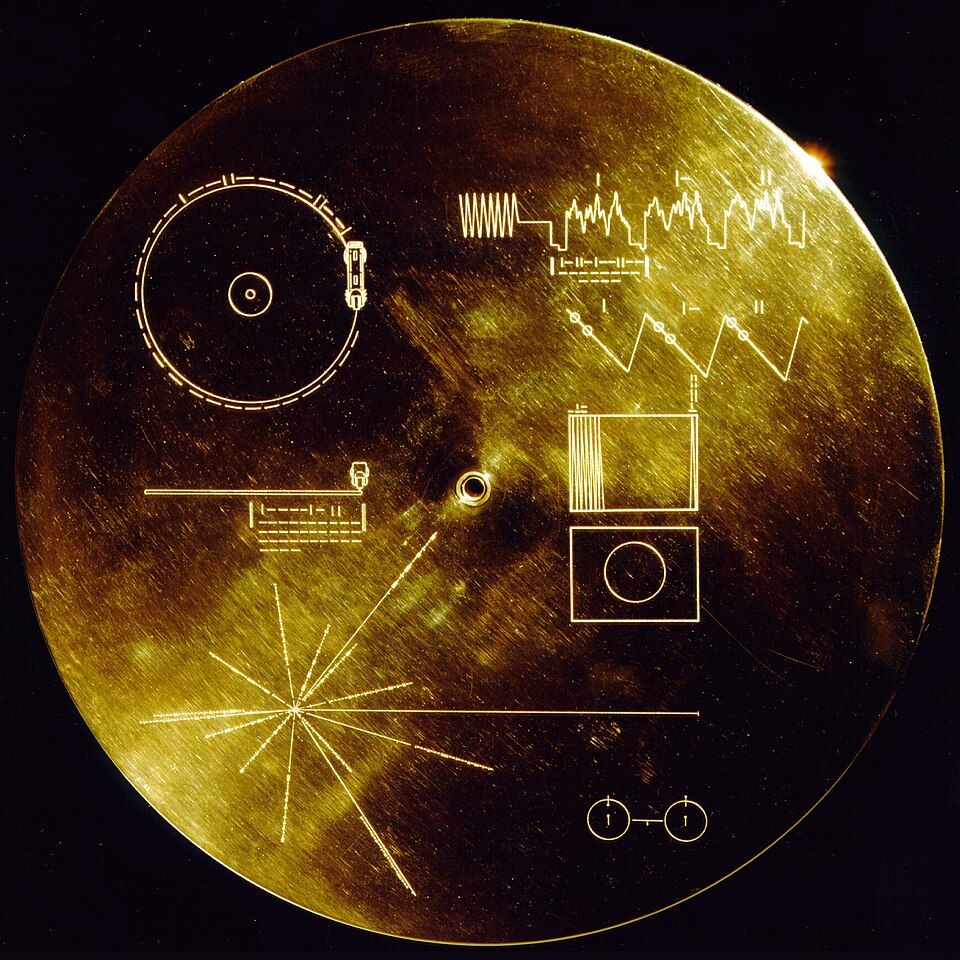
The Voyager Golden Record: a gold-plated copper disc carrying sounds and images from Earth, launched aboard Voyager 1 and 2 in 1977. Image Credit: NASA
In about 40,000 years, the probe will drift within a few light-years of a star called Gliese 445. It will not be transmitting by then.
But it will still carry the Golden Record, a phonograph disc of sounds and images from Earth, thrown into the space between stars by engineers whose best computer ran on 68 kilobytes.
Sources
- Primary Source: Engineers Pinpoint Cause of Voyager 1 Issue, Are Working on Solution (NASA)
- Additional Context:

Fact Check: Claim-by-Claim Verification Verified
The article accurately reports the Voyager 1 FDS repair, distances, timelines, and technical details as confirmed by official NASA/JPL sources and reliable journalism.
Commentary
- Article projects future events like light-day milestone and DSS-43 timeline based on NASA data but not yet occurred as of March 2026.
- Memory size listed as exactly 68 KB while sources approximate 68-69 KB; minor rounding acceptable for popular science.
- No mention of "Suzy Dodd" in primary sources; possibly internal team lead, but core technical claims verified independently.
Sources used for verification
Academic/Peer-reviewed:
Other reliable sources:
- Engineers Pinpoint Cause of Voyager 1 Issue - science.nasa.gov
- NASA’s Voyager 1 Resumes Sending Engineering Updates - jpl.nasa.gov
- Voyager 1 nears one light-day from Earth - interestingengineering.com
- NASA's Deep Space Station in Australia Upgrade - nasa.gov
- NASA's Voyager 1 resumes sending engineering updates - phys.org
- Voyager FAQs - science.nasa.gov
Fact-checked by Perplexity Sonar Pro on 2026-03-11