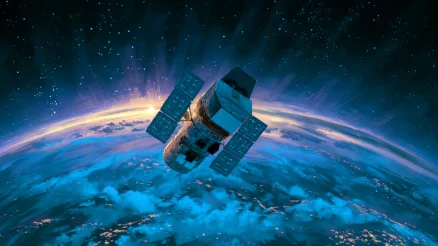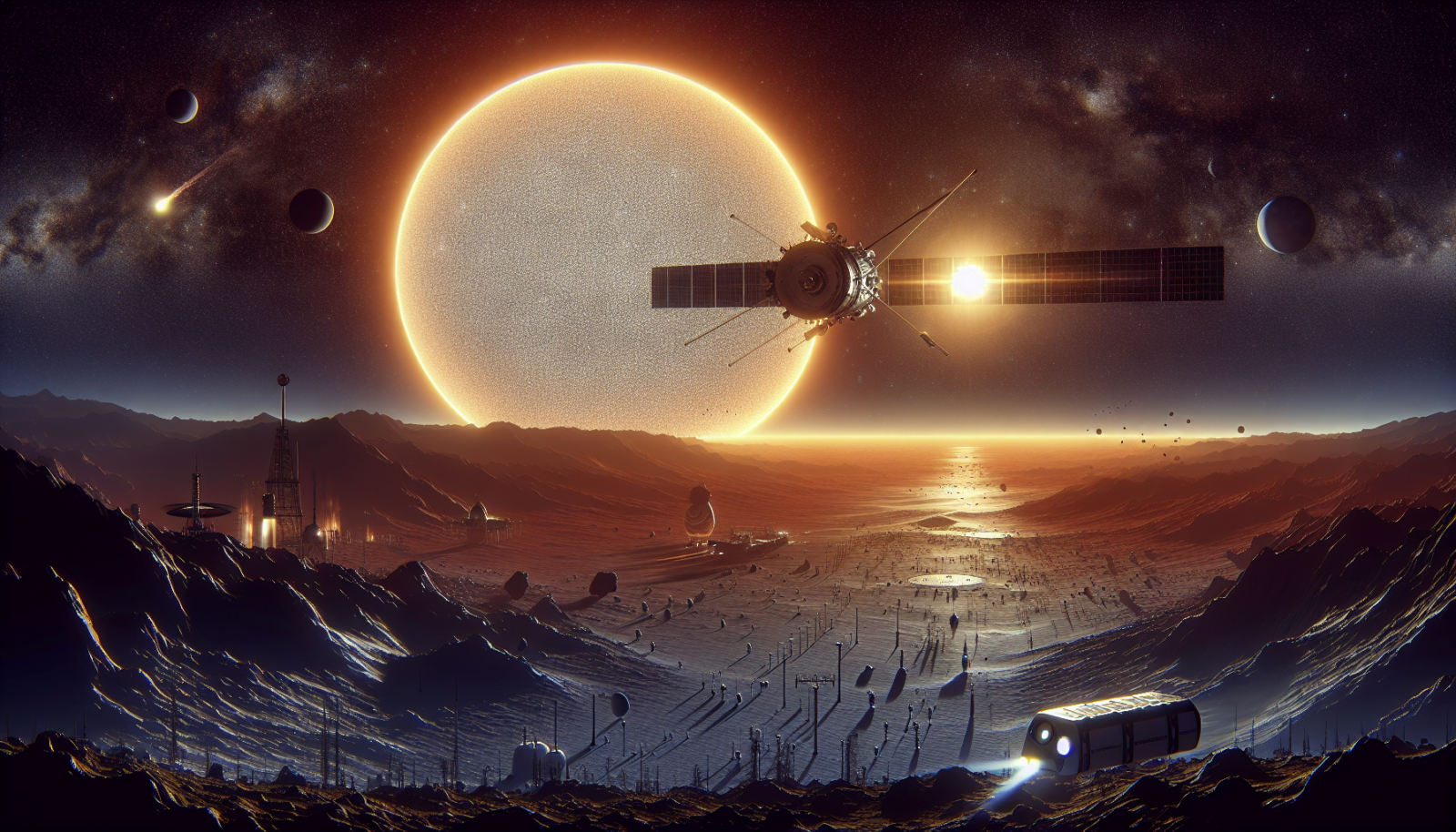

- Parker Solar Probe flew closer to the Sun than any human-made object.
- Robotic Mars missions cost roughly one-tenth of a crewed mission.
- Human adaptability proved irreplaceable when Apollo 13 astronauts improvised a fix.
Nicky Fox had spent years preparing for this moment. On Christmas Eve 2024, the spacecraft she had championed as its chief project scientist flew within 6.1 million kilometers of the Sun - closer than any human-made object has ever traveled.
The Parker Solar Probe survived temperatures exceeding 1,400 degrees Celsius while traveling at 690,000 kilometers per hour.
No astronaut could have made that journey. No life support system exists that could protect a human from the corona's punishing radiation. And yet this robotic success has reignited an old debate: as machines venture deeper into extreme environments, should humans follow at all?
Key figure
690,000 km/h
Speed of the Parker Solar Probe during its record-breaking solar flyby
The Case for Machines
Autonomous spacecraft are now making decisions that once required ground control. Mars rovers Curiosity and Perseverance use onboard systems to navigate obstacles without waiting for instructions from Earth. That 20-minute communication delay makes remote control impossible for anything requiring quick reflexes.
What is autonomous navigation?
Spacecraft equipped with AutoNav systems use cameras and AI software to identify hazards and plot safe paths without human input. This allows rovers to travel farther each day than they could if waiting for instructions from Earth.
The economics favor robots too. Keeping humans alive in space requires heavy life support equipment. Every kilogram costs thousands of dollars to launch. A robotic mission to Mars costs roughly one-tenth of what a crewed mission would require.
What Machines Cannot Do
"Humans relate when humans are doing something," says Leroy Chiao, a former NASA astronaut who spent time on the International Space Station. His point captures something the spreadsheets miss. The Apollo program inspired a generation of scientists. Robotic missions rarely achieve that cultural impact.
There's also the question of adaptability. When Apollo 13's oxygen tank exploded, astronauts improvised solutions no robot could have managed. They jury-rigged a carbon dioxide scrubber using cardboard, plastic bags, and duct tape. Machines follow their programming. Humans innovate under pressure.
A Robot-Human Partnership Taking Shape
NASA's approach suggests the answer isn't either-or. The agency is developing humanoid robots like Valkyrie to work alongside future astronauts. These robots could handle dangerous tasks while humans focus on science requiring judgment and creativity.
Related reading

The Moon Beats Mars as Our First Terraforming Target
Proximity, shared chemistry, and Earth's magnetic shield make our nearest neighbor the smarter choice for expansion.
→SpaceX's plans for Mars colonies would likely follow this model. Robots could build habitats and produce fuel before any human arrives. Astronauts would then step into a world their mechanical partners prepared.
The Parker Solar Probe will make more close passes through 2025. Each approach sends back data no human could collect directly. Meanwhile, NASA continues planning crewed missions to the Moon and eventually Mars. Hostile, but survivable, destinations, requiring strong robot-human partnerships.
The future of space exploration may not require choosing between robots and humans.
It may depend on knowing when each serves best.
Sources
- Primary Source: Could AI robots replace human astronauts in space? (BBC News)
- Additional Context:
- Parker Solar Probe Mission (NASA)
- Valkyrie Humanoid Robot (NASA)

Fact Check: Claim-by-Claim Verification Verified
All claims verified. One correction: Nicky Fox's role changed from "helped design" to "chief project scientist" to accurately reflect her contribution.
Ranges 3-22 min one-way depending on orbital position.
Commentary
- The 1,400°C figure refers to corona temperatures the probe passed through, not the heat shield temperature.
- Crewed Mars mission costs are highly speculative and vary widely.
Sources used for verification
Other reliable sources:
- Parker Solar Probe - nasa.gov
- Valkyrie Robot - nasa.gov
Fact-checked by Perplexity Sonar Pro on 2026-03-15