Quaternary Ice Age: Why Earth Is Still in an Ice Age
The Quaternary Ice Age is the current geological interval of repeated glacial and interglacial cycles, beginning 2.58 million years ago.


23 glossary terms
Earth and environmental sciences examine the planet as a single, coupled system. The atmosphere, oceans, landforms, and living communities are not separate domains; they influence one another on timescales ranging from seconds to millions of years. The terms in this section cover the processes that shape landscapes, the cycles that move water and carbon between reservoirs, and the measurements scientists use to track change. You will find geological concepts like unconformity alongside modern ideas such as yield gaps in agriculture or wetland restoration. Together they frame how scientists diagnose what the Earth is doing now, and what it has done before.
The Quaternary Ice Age is the current geological interval of repeated glacial and interglacial cycles, beginning 2.58 million years ago.
Jet streams are narrow bands of fast-moving wind in Earth's upper atmosphere, flowing west to east near the tropopause, steering weather systems and shaping climate patterns across continents.
Paleomagnetic dating determines the age of rocks and sediments by measuring the magnetic signatures they acquired when they formed, matching polarity patterns to a global timeline of Earth's magnetic reversals.
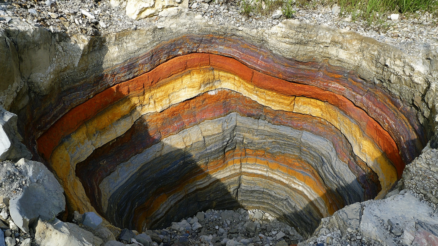
An unconformity is a surface in the rock record where a gap in geological time separates two layers of stone, spanning millions to billions of years.
Isotope geochemistry reads the ratios of atomic isotopes in rocks, water, and air to reconstruct Earth's history and trace environmental processes.
Geothermal energy production extracts heat from Earth's interior to generate electricity or supply direct heating, using three plant types and emerging enhanced systems.
The ice-albedo feedback loop is a self-reinforcing climate process where melting ice exposes darker surfaces, raising temperatures and accelerating further ice loss.
Fossilization is the set of physical and chemical processes preserving organisms in Earth's crust, typically within sedimentary rock.
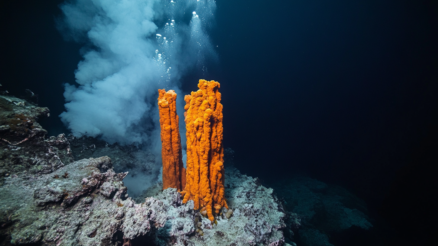
Hydrothermal vents are fissures in the ocean floor where superheated, mineral-laden water erupts from Earth's crust, hosting ecosystems powered by chemistry, not sunlight.
Carbon sequestration captures and stores atmospheric CO2 in forests, oceans, and underground formations. Learn how natural and engineered methods work.