- Global geothermal capacity reached 17,173 MW by end of 2025.
- Three plant types convert subsurface heat into electricity.
- Enhanced geothermal systems could unlock 2,000 times more energy.
Geothermal energy production is the process of extracting heat from Earth's interior to generate electricity or supply direct heating. The heat originates from radioactive decay deep in the planet's core and mantle, a reservoir so vast it has powered volcanic activity for billions of years.
Why Geothermal Energy Production Matters
Key figure
17,173 MW
Global installed capacity (2025)
The world's geothermal power plants produced 17,173 megawatts of electricity by the end of 2025, according to ThinkGeoEnergy's annual survey. That number is modest compared to solar or wind. But geothermal offers something neither can: constant output, day and night, regardless of weather.
The United States leads with 3,953 MW of installed capacity, followed by Indonesia at 2,742 MW. Iceland, though smaller in absolute terms, generates roughly 25% of its electricity from geothermal sources, making it a model for what the technology can deliver where geology cooperates.
Geothermal's carbon footprint is small. Lifecycle emissions average about 45 grams of CO2 per kilowatt-hour, according to the International Energy Agency. Coal produces roughly 820 grams per kilowatt-hour. That difference makes geothermal one of the lowest-emission electricity sources available, competitive with wind and nuclear.
How Three Types of Power Plants Harvest Earth's Heat
All geothermal power plants work by bringing subsurface heat to the surface, but the method depends on the temperature and state of the underground fluid.
Dry steam plants, the oldest design, pipe natural steam directly from underground reservoirs to spin turbines. The Geysers complex in northern California, operating since 1960, remains the world's largest geothermal installation and still uses this approach.
Flash steam plants, the most common type globally, draw high-pressure hot water (above 180 degrees Celsius) from deep wells. When that water reaches the lower-pressure environment at the surface, it "flashes" into steam. The steam drives a turbine, and leftover water is injected back underground.
Binary cycle plants handle lower-temperature resources, as low as 57 degrees Celsius. They pass geothermal water through a heat exchanger, transferring its warmth to a secondary fluid with a lower boiling point, often an organic compound like isobutane.
That fluid vaporizes, spins the turbine, and condenses in a closed loop. No geothermal fluid reaches the atmosphere, making binary plants the cleanest variant.
The Next Frontier: Engineering Heat Where Nature Didn't
Key figure
~2,000x
EGS potential vs. conventional
Conventional geothermal depends on a rare geological combination: heat, permeable rock, and water, all in the same place. Enhanced Geothermal Systems (EGS) remove that limitation by creating artificial reservoirs. Engineers drill into hot, dry rock, fracture it hydraulically, and circulate water through the fractures to collect heat.
The scale of opportunity is hard to overstate. The IEA estimates that EGS could access nearly 2,000 times more energy than conventional geothermal resources. In practical terms, geothermal could meet up to 15% of global electricity demand growth through 2050 if costs continue to fall.
Progress accelerated in 2024. Tim Latimer's startup Fervo Energy produced 10 megawatts of electricity from a single enhanced well at its Utah site, while cutting drilling costs by 50% compared to its earlier projects.
In 2025, the startup Zanskar used machine learning to locate a hidden geothermal reservoir in western Nevada. It was the first "blind" discovery (a reservoir with no surface expression) in over three decades.
Key Context
Prince Piero Ginori Conti generated the first geothermal electricity in 1904 at Larderello, Italy, using steam to power a small dynamo that lit five light bulbs.
The same field still operates today, more than a century later, a testament to the longevity of geothermal reservoirs when managed properly.
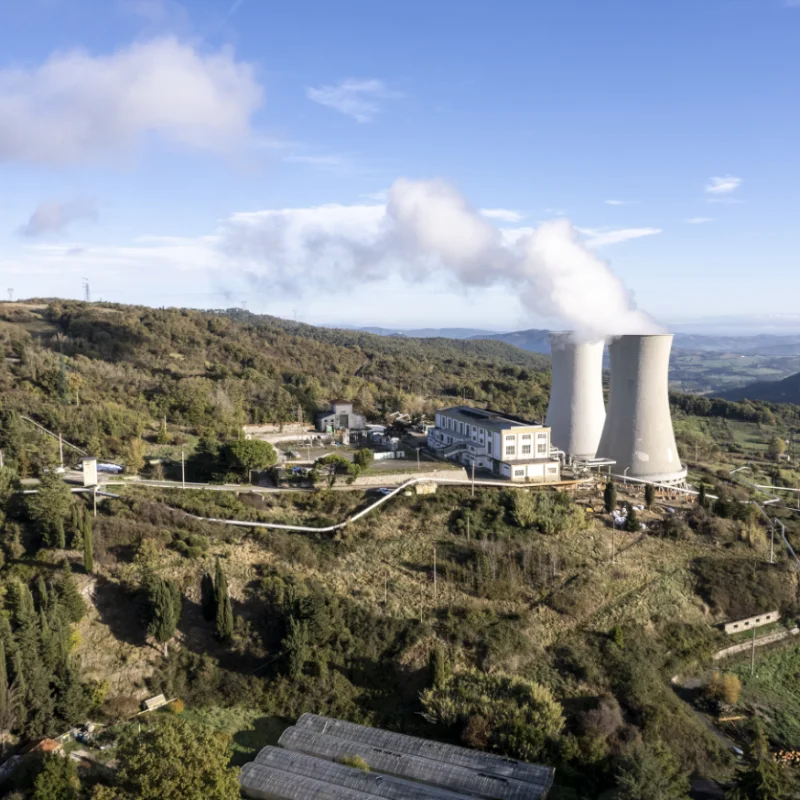
Geothermal energy production: The Nuova Larderello geothermal power plant in Tuscany, part of the world's oldest geothermal complex. First harnessing geothermal energy for electricity in 1911, the site and its 33 companion plants now supply over 30% of the region's energy needs. Photo credit: Enel Group.
The next generation of geothermal targets "superhot rock," formations above 400 degrees Celsius found at depths of 5 to 20 kilometers. The Clean Air Task Force identified superhot rock geothermal as a priority frontier technology in 2025, noting that a single well tapping supercritical fluid could produce 5 to 10 times more power than a conventional geothermal well.
FAQ
What is the difference between conventional geothermal and enhanced geothermal systems?
Conventional geothermal taps naturally occurring reservoirs where hot water or steam already exists underground. Enhanced geothermal systems create artificial reservoirs by fracturing hot, dry rock and circulating injected water. EGS can work almost anywhere with sufficient depth and temperature, while conventional geothermal requires specific geological conditions.
Can geothermal energy work in locations without volcanic activity?
Yes. Heat increases with depth everywhere on Earth, typically by about 25 to 30 degrees Celsius per kilometer. Enhanced geothermal systems access this heat by drilling deeper, usually 3 to 10 kilometers, making geothermal feasible far from tectonic boundaries.
How does geothermal compare to solar and wind in reliability?
Geothermal plants typically operate at capacity factors above 90%, meaning they produce power more than 90% of the time. Solar panels average roughly 25% and wind turbines around 35%. This makes geothermal a baseload source, capable of providing steady power without batteries or backup.
Is geothermal energy truly renewable, or can reservoirs run out?
Earth's internal heat is effectively inexhaustible on human timescales. Individual reservoirs can lose pressure if fluid is extracted faster than it recharges, but modern plants reinject spent fluid to maintain reservoir pressure. The Larderello field in Italy has operated continuously since 1913.
Related Reading


Sources
- Primary Sources:
- Geothermal Basics (U.S. Department of Energy)
- Geothermal Explained (U.S. Energy Information Administration)
- Additional Context:
- Global Top 10 Geothermal Power Countries at Year-End 2025 (ThinkGeoEnergy)
- The Future of Geothermal Energy (International Energy Agency)
- 2024 Year in Review (Fervo Energy)
- Superhot Rock and the Future of Geothermal (Clean Air Task Force)

Fact Check: Claim-by-Claim Verification Verified
All 17 claims verified against authoritative sources including U.S. DOE, EIA, IEA, ThinkGeoEnergy, and Fervo Energy. No corrections needed.
Sources used for verification
- Geothermal Basics - energy.gov
- Geothermal Explained - eia.gov
- Global Top 10 2025 - thinkgeoenergy.com
- Future of Geothermal Energy - iea.org
- 2024 Year in Review - fervoenergy.com