Engineering

Metamaterial Cloaking Technology: The Science of Invisibility
Metamaterial cloaking technology uses engineered materials to guide electromagnetic waves around objects, rendering them undetectable. From the 2006 first cloak to current research.

Vortex Shedding: How Fluid Flow Creates Oscillating Forces
Vortex shedding is the periodic release of alternating vortices from a bluff body in fluid flow, producing oscillating forces in the body's wake.

Joule-Thomson Effect: Why Most Gases Cool on Expansion
The Joule-Thomson effect is the temperature change when a real gas expands through a valve at constant enthalpy, with no heat exchange.

Lichtenberg Figures: From Lightning Scars to Laser Printers
Lichtenberg figures are branching, tree-like shapes produced when high-voltage electrical discharges spread across or through an insulating material.

Nuclear Fusion Reactor Designs: Types, Progress, and Timeline
Nuclear fusion reactor designs are the engineering systems built to confine plasma hot enough for atomic nuclei to fuse and release energy.

Jet Propulsion: How Thrust Powers Flight and Space Travel
Jet propulsion generates forward thrust by expelling mass in the opposite direction, applying Newton's third law of motion.

Geothermal Energy Production: How Earth's Heat Becomes Power
Geothermal energy production extracts heat from Earth's interior to generate electricity or supply direct heating, using three plant types and emerging enhanced systems.

Haber-Bosch Process: The Reaction That Feeds Half the World
The Haber-Bosch process produces ammonia from atmospheric nitrogen, sustaining half the global food supply through synthetic fertilizers.
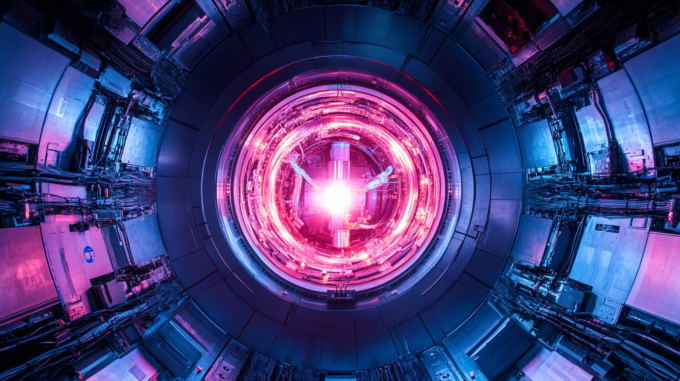
Fusion Energy Confinement: How Plasma Is Held for Power
Fusion energy confinement methods hold plasma at extreme temperatures long enough for atomic nuclei to fuse, using magnetic fields or rapid compression to...

Electrostatic Precipitation: How Electric Fields Clean Air
Electrostatic precipitation removes fine particles from industrial gas streams by charging them with high-voltage electric fields and collecting them on metal plates.