Wetland Restoration Techniques: Rebuilding Lost Ecosystems
Wetland restoration techniques return degraded ecosystems to health through hydrology repair, revegetation, and invasive species control. Full recovery may take decades.


23 glossary terms
Earth and environmental sciences examine the planet as a single, coupled system. The atmosphere, oceans, landforms, and living communities are not separate domains; they influence one another on timescales ranging from seconds to millions of years. The terms in this section cover the processes that shape landscapes, the cycles that move water and carbon between reservoirs, and the measurements scientists use to track change. You will find geological concepts like unconformity alongside modern ideas such as yield gaps in agriculture or wetland restoration. Together they frame how scientists diagnose what the Earth is doing now, and what it has done before.
Wetland restoration techniques return degraded ecosystems to health through hydrology repair, revegetation, and invasive species control. Full recovery may take decades.
Solar wind is a continuous stream of charged particles from the Sun, flowing at 400 to 800 kilometers per second. When this plasma reaches Earth, it compresses the magnetic field, drives geomagnetic storms, generates auroras, and can disrupt power grids and satellites.
Upwelling zones bring cold, nutrient-rich deep water to the ocean surface, powering fisheries that supply 25% of the global marine catch from just 5% of ocean area.
Light pollution effects are the measurable consequences of artificial light at night on human health, wildlife behavior, and astronomical observation.
Thermohaline circulation is the ocean's density-driven current system, redistributing heat, nutrients, and carbon dioxide across all ocean basins.
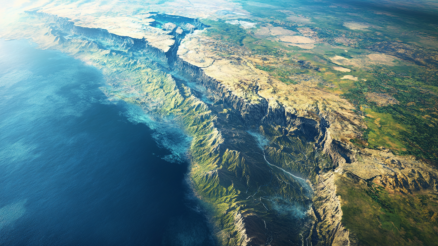
Plate tectonics is the theory that Earth's outer shell is divided into rigid plates that move on a slowly flowing layer of rock beneath them.
The Keeling Curve is a graph of atmospheric CO2 concentrations measured continuously at Mauna Loa Observatory since 1958, the longest unbroken record of carbon dioxide in Earth's atmosphere.
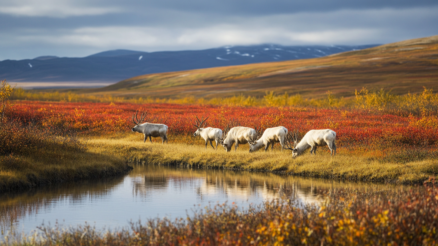
Permafrost thaw is the warming and decomposition of ground frozen for at least two years, releasing stored carbon as the ice binding soil, rock, and organic matter breaks down.
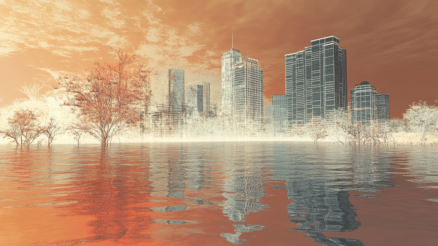
The urban heat island effect is the measurable temperature difference between built-up urban areas and surrounding rural land, driven by heat-absorbing surfaces.
The yield gap is the difference between the crop yield farmers harvest and the maximum their land could produce under optimal conditions.