
- Arctic permafrost holds up to 1,600 gigatons of carbon.
- Thawing permafrost releases CO2 and methane, amplifying warming.
- Permafrost loss reduces the 1.5C carbon budget by 25 percent.
Permafrost thaw is the warming and decomposition of ground that has remained frozen for at least two consecutive years, releasing stored carbon into the atmosphere as the ice binding soil, rock, and organic matter breaks down.
Why It Matters
Key figure
1,400-1,600 Gt
Carbon locked in Arctic permafrost
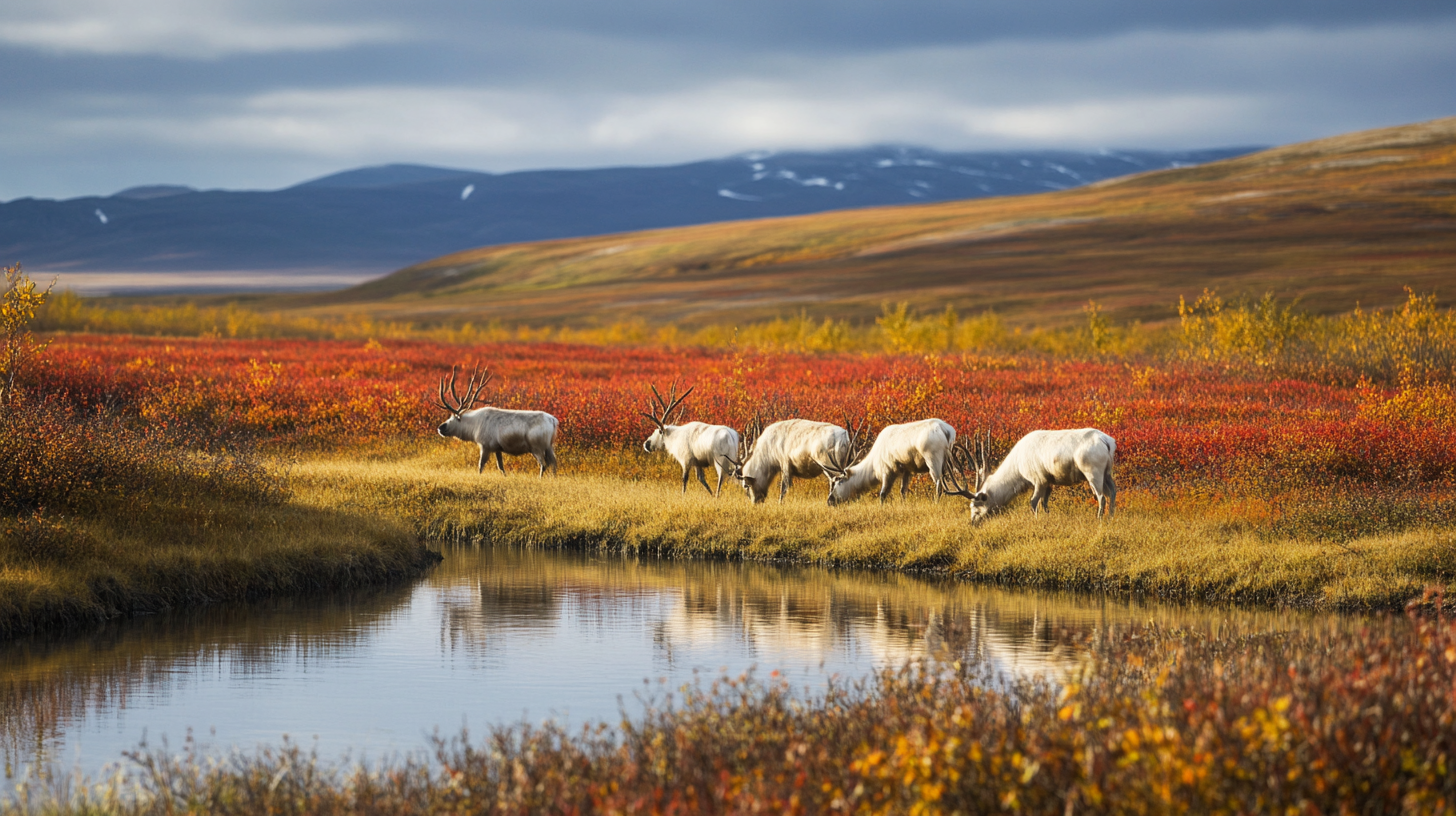
Northern Hemisphere permafrost holds an estimated 1,400 to 1,600 gigatons of carbon, according to the National Snow and Ice Data Center and NOAA. That is roughly twice the amount currently in the atmosphere. As temperatures climb, this frozen reservoir is beginning to open.
The Arctic has warmed by approximately 3 degrees Celsius since the early 1970s, about three times the global average, according to the Arctic Monitoring and Assessment Programme. This amplified warming, driven by the ice-albedo feedback loop, is pushing permafrost past its thaw threshold across vast stretches of Siberia, Alaska, and northern Canada.
What thaws does not simply sit idle. Microbes in the newly exposed soil consume organic material locked away for thousands of years, converting it to carbon dioxide and methane. Methane, though shorter-lived, traps roughly 80 times more heat per molecule than CO2 over a 20-year window, according to the U.S. Environmental Protection Agency. The result is a self-reinforcing cycle: warming thaws permafrost, which releases greenhouse gases, which drives further warming.
A 2026 study in Communications Earth & Environment found that including permafrost thaw and wildfire emissions reduces the remaining carbon budget for staying below 1.5 degrees Celsius by 25 percent from 2025 onward.
How Permafrost Melting Works
Key figure
3 m
Depth of carbon-rich permafrost layer
Permafrost exists in layers. The top meter or so, called the active layer, thaws each summer and refreezes each winter. Below it lies ground that has stayed frozen continuously, in some locations for tens of thousands of years.
As annual average temperatures rise, the active layer deepens. The boundary between thawed and frozen ground, known as the permafrost table, drops lower. In regions with ice-rich permafrost, this causes the surface to slump and buckle, a process called thermokarst. Roads crack. Foundations tilt. In Yakutsk, Siberia, buildings designed for stable permafrost are now sinking as the ground beneath them softens.
The top three meters of permafrost soils contain roughly 1,035 gigatons of carbon, plus or minus 150 gigatons, according to modeling published in Earth's Future in 2025. Under a moderate warming scenario (SSP2-4.5), approximately 180 gigatons of that carbon could become available for microbial decomposition by the end of the century. Under a high-emissions scenario (SSP5-8.5), the figure rises to 300 gigatons.
Not all of this carbon reaches the atmosphere immediately. Decomposition rates depend on soil moisture, temperature, and oxygen availability. Waterlogged, oxygen-poor conditions favor methane production. Drier soils produce mostly CO2. Both pathways amplify warming, but at different rates and timescales.
Key Context
The word "permafrost" entered English in 1943, coined by Russian-born Stanford geologist Siemon W. Muller. The U.S. Geological Survey had commissioned Muller to review Soviet research on frozen ground during World War II, as construction of the Alaska Highway pushed through permafrost terrain in Yukon and northern British Columbia. His term, a contraction of "permanent frost," translated the Russian vechnaia merzlota (eternally frozen earth). Russian and Soviet scientists had been studying the phenomenon since at least 1735, when observers on the Great Northern Expedition first recorded perennially frozen ground.
Permafrost thaw also acts as an unexpected archive. In June 2022, a gold miner in the Yukon uncovered a mummified baby woolly mammoth, later named Nun cho ga by Tr'ondek Hwech'in Elders, preserved in permafrost for over 30,000 years. As permafrost degrades, it is simultaneously revealing and destroying such records of deep time.
FAQ
What is the difference between permafrost thaw and seasonal thaw?
Seasonal thaw affects only the active layer, the topmost soil that melts every summer and refreezes in winter. Permafrost thaw refers to the permanent loss of frozen ground below this layer, where temperatures have remained at or below zero degrees Celsius for at least two years. Once permafrost thaws, it does not refreeze on human timescales.
Can permafrost thaw be reversed?
In practical terms, no. Refreezing permafrost would require sustained cooling over decades to centuries, and the carbon already released cannot be recaptured by the soil. Some researchers are exploring interventions such as reflective ground cover or managed grazing to slow the process, but these remain experimental and local in scale.
Does permafrost thaw only happen in the Arctic?
Most permafrost exists in the Arctic, but it is also found on the Tibetan Plateau, in mountain ranges such as the Andes and Alps, and in parts of Antarctica. High-altitude permafrost, though less extensive, is thawing at comparable rates and poses risks to mountain infrastructure and water supplies.
How does permafrost thaw affect local communities?
Indigenous communities across the Arctic are experiencing direct consequences: buildings and roads buckling on unstable ground, erosion along coastlines, and disruption of traditional hunting and travel routes. In Alaska, several villages are considering or actively planning relocation because of permafrost-related land loss.
Related Reading



Sources
- Primary Research: Permafrost Thaw Impact on Remaining Carbon Budgets (Georgievski et al., 2025)
- Additional Context:
- Permafrost and wildfire carbon emissions (Communications Earth & Environment, 2026)
- Why Frozen Ground Matters (National Snow and Ice Data Center)
- Permafrost Explainer (MIT Climate Portal)
- Permafrost - Alaska Nature and Science (U.S. National Park Service)

Fact Check: Claim-by-Claim Verification Verified
All eight claims verified against authoritative sources including NSIDC, EPA, AMAP, and peer-reviewed studies in Earth's Future and Communications Earth & Environment.
Sources used for verification
- Why Frozen Ground Matters - NSIDC
- Understanding Global Warming Potentials - EPA
- Permafrost Thaw Impact on Carbon Budgets - Earth's Future
- Permafrost and wildfire carbon emissions - Communications Earth & Environment
- Mummified baby woolly mammoth - Yukon.ca