


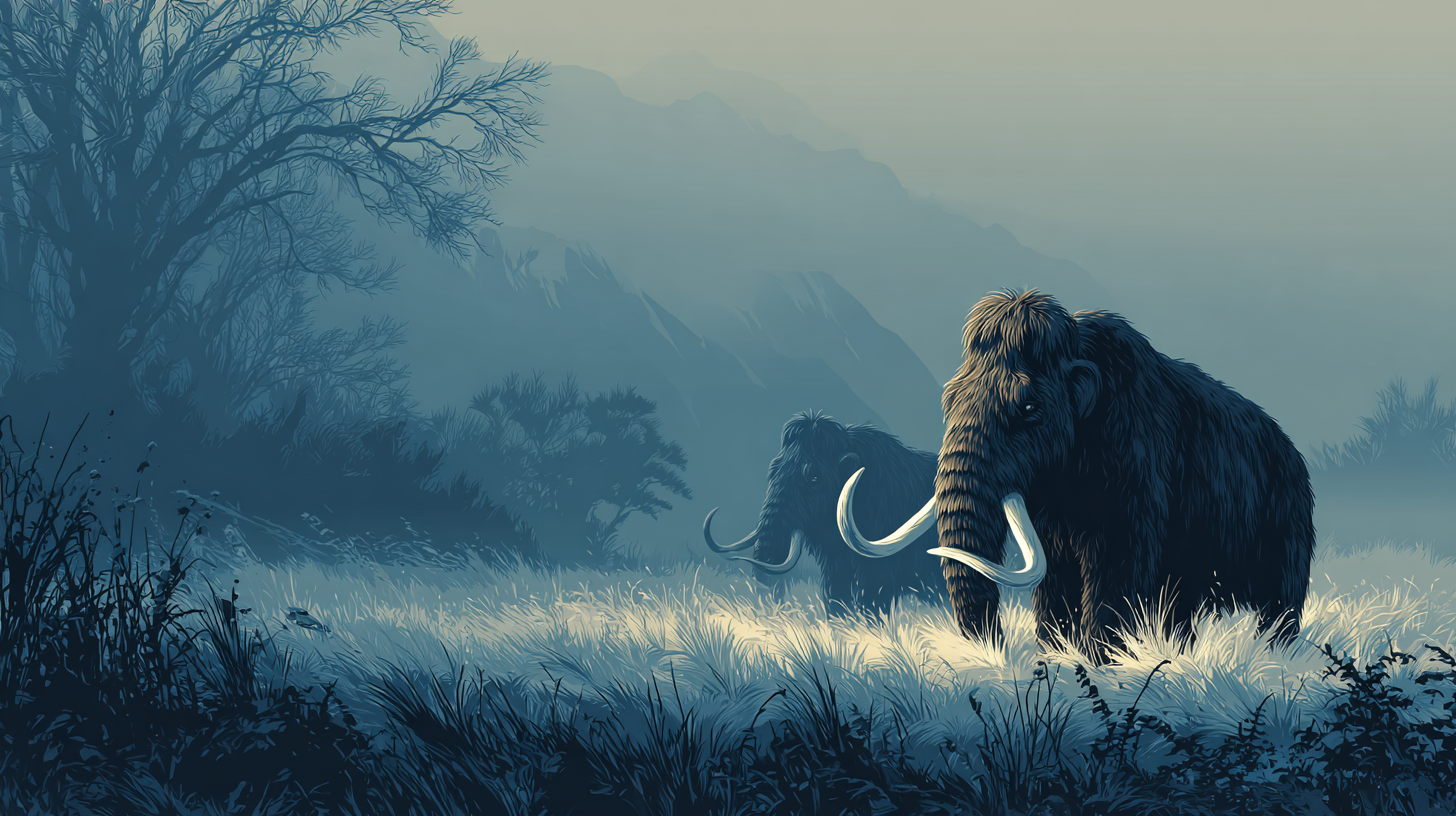

- Mammoths lead de-extinction efforts because of cultural obsession, not scientific ease.
- Humans coexisted with mammoths for 10,000 years; they appear in 500+ prehistoric artworks.
- Colossal Biosciences raised $435 million and engineered mammoth-like traits into mice.
Rebecca Woods was sifting through centuries of mammoth lore when she realized the obvious answer had been hiding in plain sight. The reason Colossal Biosciences chose woolly mammoths as their flagship de-extinction project had little to do with scientific feasibility. It had everything to do with us.
The mammoth obsession runs deeper than most researchers admit. These Ice Age giants are woven into human culture in ways that dodos and thylacines simply are not. Dig deep enough almost anywhere in the Northern Hemisphere and you will hit mammoth bones or tusks.
Woods, a historian at the University of Toronto, traced how mammoths became symbols of extinction itself. The connection is not accidental.
Key figure
500+
Mammoth depictions in prehistoric art, spanning 35,000 to 11,500 years ago
Mammoths Walked Beside Our Ancestors
Modern humans coexisted with woolly mammoths for at least 10,000 years. Cave painters at Rouffignac in France depicted them clearly enough that when those images were discovered in the early 20th century, scientists recognized the species immediately.
Mammoths rank as the third most depicted animal in Ice Age art, after horses and bison. Among the oldest known musical instruments is a flute carved from mammoth ivory, found in the Geissenklösterle cave in Germany and dating back over 40,000 years.
This is not coincidence. Our ancestors ate mammoths, built shelters from their bones, carved tools from their tusks. The relationship was intimate and persistent.
What is de-extinction?
De-extinction uses genetic engineering to recreate traits of extinct species in living relatives. For mammoths, this means editing Asian elephant DNA to express mammoth characteristics like thick hair and cold-adapted blood. The result would be a hybrid, not a true resurrection.
Extinction Stories That Mirror Our Own Rise
The late 19th century transformed how we see mammoths. As passenger pigeons vanished and bison herds collapsed, scientists began connecting human expansion with species loss. Mammoth extinction fit this narrative perfectly.
Charles R. Knight's murals at the American Museum of Natural History cemented the image: early humans hunting mammoths across frozen plains. Whether humans actually drove mammoths extinct remains contested. Recent DNA studies suggest climate change destroyed their habitat before hunting could finish them off.
The debate hardly matters for cultural purposes. The mammoth became a mirror reflecting humanity's complicated relationship with nature.
Why Colossal Chose the Mammoth
Colossal Biosciences, the Dallas-based startup behind mammoth de-extinction, raised $435 million by January 2025. Their valuation reached $10.2 billion. Chief Science Officer Beth Shapiro, a paleogeneticist at UC Santa Cruz, leads the effort alongside geneticist George Church.
In March 2025, Colossal announced woolly mice, rodents engineered with seven modified genes that give them shaggy, mammoth-like coats. The work demonstrated their gene-editing capabilities, if not actual mammoth resurrection.
Shapiro is candid about limitations. Creating something genetically identical to a mammoth is impossible. Asian elephants share 99.6% of mammoth DNA, which helps. But behavior, learned from parents, cannot be edited into existence.
The first mammoth-like creatures, if they ever exist, will have no elders to learn from.
The Attraction Runs Both Ways
Publicity stunts keep proving the mammoth's pull. In 2023, an Australian startup unveiled a mammoth meatball grown from reconstructed DNA. Environmental activists have targeted mammoth displays in museums. Each stunt works because mammoths mean something.
Thomas Jefferson hoped living mammoths would be found beyond American colonial borders in the 1790s. Arctic peoples who encountered preserved carcasses imagined them as giant burrowing creatures that died when exposed to air. The mammoth has always invited explanation.
Whether Colossal succeeds technically matters less than what the attempt reveals. The mammoth holds our attention because it reflects something about ourselves: the species that outlived giants, then wondered if it should bring them back.
Sources
- Primary Analysis: Rebecca Woods, "Why are we so obsessed with bringing back the woolly mammoth?" (The Conversation, July 2025)
- Additional Context:
- Colossal Biosciences engineers woolly mammoth-like hair into mice (Chemical & Engineering News)
- 'Resurrection science' is gaining steam (CNN)
- Woolly mammoth (Wikipedia - cave art statistics)

Fact Check: Claim-by-Claim Verification Verified
All claims verified. One correction applied: mammoth ivory flute age updated from "30,000 years" to "over 40,000 years" with correct cave location (Geissenklösterle).
Commentary
- Mammoth ranking in Ice Age art (third most depicted) is from Wikipedia and may vary by methodology.
- Jefferson actually believed in mastodons, not woolly mammoths specifically, but the distinction is reasonable for a popular article.
Sources used for verification
Academic/Peer-reviewed:
- Rebecca Woods research on mammoth cultural history (University of Toronto)
Other reliable sources:
Fact-checked by Perplexity Sonar Pro on 2026-03-15


