- De-extinction produces proxy organisms, not true species revivals.
- Only one extinct animal has been cloned; it survived seven minutes.
- Colossal Biosciences has raised $225M+ to revive mammoths by 2028.
De-extinction is the use of biotechnology to generate organisms that resemble or functionally replace species that have gone extinct, typically through cloning, gene editing, or selective back-breeding.
Why It Matters
The term entered mainstream biology in 2013, when conservation advocate Stewart Brand organized a TEDx event titled "De-Extinction" at the National Geographic Society in Washington, D.C. The conference brought together geneticists, conservation biologists, and ethicists to debate whether reviving lost species was scientifically viable and ecologically wise.
Key figure
7 min
Survival time of the only cloned extinct animal, a bucardo, in 2003
That debate has intensified. In 2021, Harvard geneticist George Church and entrepreneur Ben Lamm founded Colossal Biosciences, a company dedicated to resurrecting the woolly mammoth, the Tasmanian tiger, and the dodo. Colossal has raised over $225 million in funding, making de-extinction a commercial proposition for the first time.
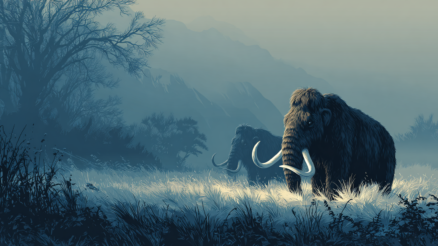
The company's stated goal is to produce a mammoth calf by 2028, using CRISPR-edited Asian elephant cells implanted into surrogate mothers. Science Reader's coverage of why mammoths dominate de-extinction efforts examines the cultural forces behind this ambition. The scientific debate, though, extends well beyond any single species.
How It Works
Three main techniques define the field. Cloning uses preserved DNA to produce a genetic copy of a dead animal. In 2003, Spanish and French scientists cloned a bucardo (Pyrenean ibex) using cells frozen before the last individual died in 2000. The clone survived for seven minutes before dying of a lung defect, making it the only extinct animal ever briefly brought back through cloning.
Gene editing, particularly CRISPR, takes a different approach. Rather than copying an extinct genome, scientists edit a living relative's DNA to express traits associated with the lost species. Colossal's "dire wolf" project illustrates both the promise and the controversy.
In 2024 and 2025, the company produced three gray wolves (Romulus, Remus, and Khaleesi) carrying 15 of 20 targeted edits matching dire wolf sequences. Colossal's own chief scientist, paleogeneticist Beth Shapiro of UC Santa Cruz, acknowledged in May 2025 that the animals are "gray wolves with 20 edits," not true dire wolves.
Back-breeding, the oldest method, selectively breeds living animals to recover ancestral traits. The Heck brothers attempted this with the aurochs in the 1920s and 1930s, producing Heck cattle that superficially resembled the extinct wild ox but carried an entirely different genome.
None of these methods recreates the original species. What they produce are proxies: organisms that look or function like extinct animals without sharing their full genetic or evolutionary history.
The Stakes
Key figure
$225M+
Venture funding raised by Colossal Biosciences for de-extinction projects
The moral hazard argument looms large. Ethicists at the University of Texas at Austin have warned that if society believes extinction can be reversed, the urgency to prevent it may weaken. Shapiro herself has asked whether resources should go toward "things that are still alive, instead of trying to bring things back."
Intellectual property adds another layer. In 2025, MIT Technology Review reported that Colossal had filed patents covering the use of extinct DNA. The filings raised questions about who would own a de-extincted animal and whether private firms could hold monopolies over engineered species released into the wild.
A 2025 paper in Biological Conservation described de-extinction as "a tool, not a panacea for the biodiversity crisis," urging that it complement existing conservation work rather than replace it.
FAQ
Is de-extinction the same as cloning?
No. Cloning is one of several techniques used in de-extinction, but most current projects rely on gene editing rather than cloning. Cloning requires well-preserved DNA and a compatible surrogate, which limits its use to recently extinct species.
Has any extinct species actually been brought back?
Only once, briefly. In 2003, scientists cloned a bucardo (Pyrenean ibex), but the clone died after seven minutes due to a lung malformation. No extinct species has been sustainably revived.
Could de-extinction help fight climate change?
Colossal Biosciences argues that releasing mammoth-like creatures into the Arctic could restore grasslands by trampling shrubs and knocking over trees, which might slow permafrost thaw. Most climate scientists remain skeptical, noting that the scale required would be impractical for decades.
What is the main criticism of de-extinction?
The strongest scientific criticism is the opportunity cost argument: money and talent spent reviving extinct species could instead protect thousands of endangered species still alive today. A 2025 paper in Biological Conservation described de-extinction as "a tool, not a panacea for the biodiversity crisis."
Related Reading


Sources
- Primary Research: Pathways to de-extinction: how close can we get to resurrection of an extinct species (Shapiro, B., Functional Ecology, 2016)
- Additional Context:
- This company claimed to 'de-extinct' dire wolves. Then the fighting started (Nature, 2025)
- Between hype and hope: De-extinction is a tool, not a panacea for the biodiversity crisis (Biological Conservation, 2025)
- De-extinction technology and its application to conservation (Journal of Heredity, 2025)
- How Colossal Biosciences is attempting to own the woolly mammoth (MIT Technology Review, 2025)

Fact Check: Claim-by-Claim Verification Verified
All core claims verified against multiple independent sources. Key facts about the bucardo clone (2003), Colossal Biosciences funding ($225M+), dire wolf project (2024-2025), and Beth Shapiro's acknowledgment confirmed.
Sources used for verification
- This company claimed to de-extinct dire wolves - nature.com
- How Colossal is attempting to own the woolly mammoth - technologyreview.com
- Between hype and hope: De-extinction is a tool, not a panacea - sciencedirect.com
- Pathways to de-extinction - ucsc.edu
- Colossal breeds controversy while trying to revive mammoths - npr.org