White Dwarf Star: Formation, Structure, and Cosmic Fate
A white dwarf is the dense remnant left when a low- or intermediate-mass star exhausts its fuel and sheds its outer layers.


38 glossary terms
Space, astronomy, and cosmology ask three overlapping questions: what is out there, how did it get there, and where is it going? The terms in this section describe stars and galaxies, the instruments that observe them, and the large-scale frameworks astronomers use to interpret what they see. You will find definitions for the everyday (heliocentric model, absolute magnitude) alongside ideas still under active debate, including dark matter and the cosmic expansion. Taken together, these terms give you the footing to read a modern observatory paper or follow a mission update without losing the thread.
A white dwarf is the dense remnant left when a low- or intermediate-mass star exhausts its fuel and sheds its outer layers.
Yellow dwarf stars are G-type main-sequence stars with surface temperatures of 5,200 to 6,000 K. The Sun is the best-known example.
The interstellar medium is the gas, dust, and energetic particles filling the space between stars, supplying raw material for new stars and planets.
Gravitational lensing is the bending of light by gravity, turning massive objects into natural telescopes that reveal the hidden structure of the universe.
Hubble's law is the observation that distant galaxies move away from Earth at speeds proportional to their distance.
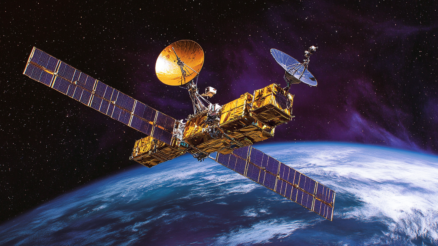
A geostationary orbit is a circular path 35,786 km above Earth's equator where satellites match the planet's rotation, appearing motionless from the ground.
Gravitational wave detection uses laser interferometry to measure spacetime ripples from merging black holes and neutron stars.
The heliocentric model places the Sun at the center of the solar system. First proposed in ancient Greece, it took 1,800 years to prove.
Dark matter detection techniques are the experimental methods physicists use to search for dark matter, a form of matter invisible to all instruments except through its gravitational pull.
The exoplanet transit method detects planets beyond our solar system by measuring the small, periodic dip in starlight when a planet crosses in front of its host star.