


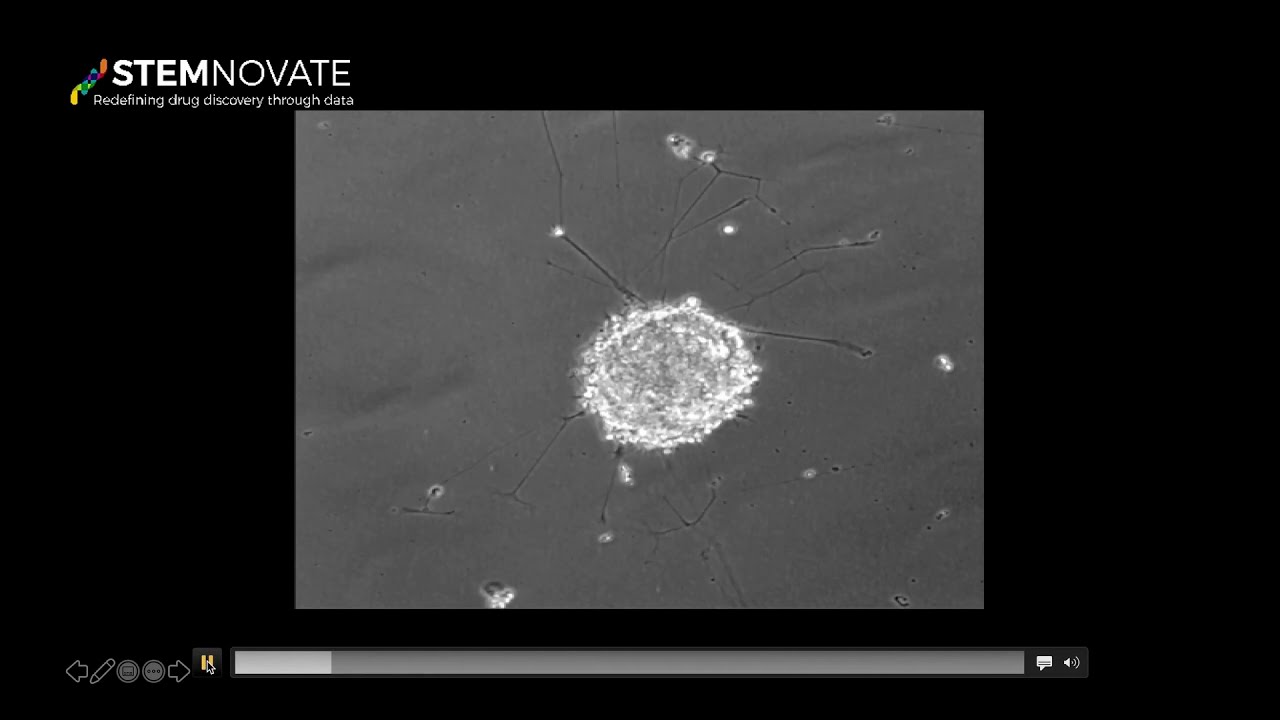

- Organoids self-organize from stem cells; they are grown, not assembled.
- The first modern organoid was intestinal, grown by Clevers in 2009.
- Brain organoids are not conscious despite EEG-like electrical activity.
Definition
Organoid tissue engineering is the practice of growing miniature, simplified organs, called organoids, by coaxing stem cells to self-organize into three-dimensional tissue. The defining feature is self-organization: the cells assemble themselves under the right chemical cues rather than being built piece by piece.
Why It Matters
Key figure
2009
Year the first modern organoid was grown
An organoid is not a manufactured part. A 2020 review in the American Journal of Physiology-Cell Physiology ("A brief history of organoids," PMC7468890) describes organoids as cells grown in a three-dimensional environment that self-organize and differentiate into functional cell types, recapitulating the structure and function of an organ in vivo. Give the cells the correct signals and a supportive gel, and they sort themselves into crypts, layers, and chambers on their own.
That word, self-organized, is what separates the modern field from classical tissue engineering. Classical tissue engineering is top-down: cells are seeded onto a scaffold shaped like the target tissue. Organoid technology is bottom-up: the shape emerges from the cells. Most current work fuses the two, using engineered hydrogels to guide self-organization, but the distinction still matters.
The reach of the technique is why it earns attention. The Harvard Stem Cell Institute describes organoids as "a new window into disease, development and discovery," because a self-organizing mini-organ recapitulates real biology in a dish. Researchers can watch a disease unfold, test a drug's toxicity, or model an organ's growth without a patient or an animal.
The field has grown accordingly. A bibliometric survey in Frontiers in Cell and Developmental Biology counted 189 organoid papers in 2014 and 3,899 in 2024, roughly a twentyfold rise in a decade.
Etymology
The term "organoid" joins the Greek organon, meaning "tool" or "instrument," with the suffix "-oid," meaning "resembling." It names something organ-like rather than an organ proper. "Tissue engineering" pairs "tissue," a group of cells sharing a function, with "engineering," the application of scientific principles to design and build.
How It Works
The process starts with stem cells, undifferentiated cells that can still become many cell types. The source is usually embryonic stem cells, induced pluripotent stem cells (iPSCs), or adult stem cells, as catalogued in the NIH review "Stem cells for organoids" (PMC11235201). iPSCs, reprogrammed from a patient's own cells, allow disease models specific to one person.
Researchers suspend these cells in a gel-like matrix, often Matrigel, that supports three-dimensional growth. They then add growth factors in a timed sequence that imitates the signals of natural development. The cells respond by dividing, differentiating, and folding into tissue.
The first organoid in the modern sense came from Hans Clevers' lab at the Hubrecht Institute in Utrecht in 2009. Building on his 2007 identification of the stem-cell marker LGR5, his postdoc Toshiro Sato grew a self-organizing "gut-in-a-dish" from a single LGR5+ intestinal stem cell, complete with crypt and villus structures.
The result is real but partial. A typical organoid is millimeter-scale and lacks blood vessels, immune cells, and the full output of a working organ. It is a model, not a replacement.
Key Context
The cerebral organoid and the consciousness question
In 2013, Madeline Lancaster and Juergen Knoblich, working at the Institute of Molecular Biotechnology in Vienna, grew the first cerebral organoids and used them to model microcephaly with patient iPSCs. These were not "the first brain organoids" in the sense of thinking tissue; they were small, layered models of early brain development.
Key figure
6 months
Age at which cortical brain organoids show EEG-like activity
The harder question arrived later. Cortical brain organoids grown for about six months have produced EEG-like electrical activity that some researchers have compared to that of a 25-to-39-week premature infant. The finding is solid; its meaning is contested. The scientific consensus treats these organoids as non-conscious, and EEG-like activity is not evidence of awareness. Even so, the comparison was enough that in November 2025, a group of scientists and bioethicists publicly called for an international oversight body for human neural organoid research (STAT News, November 6, 2025).
Organoid intelligence and biocomputing
This is where organoid work touches the question of intelligence directly. In 2023, Thomas Hartung's group at Johns Hopkins proposed "organoid intelligence" (OI) in Frontiers in Science, a program to use living brain organoids for computation. The proposal followed Cortical Labs' demonstration that cultured neurons could learn to play the video game Pong. The idea is biocomputing: using the brain's own substrate, rather than silicon, to process information.
Frequently Asked Questions
What is the difference between an organoid and an actual organ?
An organoid is a simplified, partial model, usually only millimeters across. It reproduces some of an organ's structure and cell types but lacks blood vessels, immune cells, and full function. A real organ is fully vascularized, integrated with the body, and capable of its complete job.
Can brain organoids become conscious?
The scientific consensus is no. Some six-month cortical organoids show EEG-like electrical activity that has been compared to a premature infant's, but that activity is not evidence of awareness or experience. The comparison has driven an ethics debate, not a finding of consciousness.
When was the first organoid created, and was it a brain?
The first modern organoid was intestinal, grown in Hans Clevers' lab in 2009 from a single LGR5+ stem cell. The cerebral organoid came four years later, in 2013. The brain did not come first.
What is organoid intelligence?
Organoid intelligence (OI) is a proposed field that uses living brain organoids for computation rather than silicon chips. Coined by Thomas Hartung's Johns Hopkins group in 2023, it builds on demonstrations that cultured neurons can learn simple tasks. It is early-stage and largely aspirational.

Fact Check: Claim-by-Claim Verification Verified
Every scientific claim in this entry was verified as accurate and well-attributed. The one defect found, a misattributed direct quote and wrong journal name in the "Why It Matters" definition, was corrected before publish. The science is sound throughout.
Sources used for verification
- A brief history of organoids (Am J Physiol Cell Physiol, 2020) - ncbi.nlm.nih.gov
- Stem cells for organoids - ncbi.nlm.nih.gov
- Clevers intestinal organoid history - ncbi.nlm.nih.gov
- Cerebral organoids model human brain development and microcephaly (Nature, 2013) - nature.com
- Bibliometric analysis of organoid technology 2009-2024 (Frontiers in Cell and Developmental Biology) - frontiersin.org
- Organoid intelligence (OI): the new frontier in biocomputing (Frontiers in Science, 2023) - frontiersin.org
- STAT News: call for global oversight of brain organoid research (Nov 6, 2025) - statnews.com


