Definition
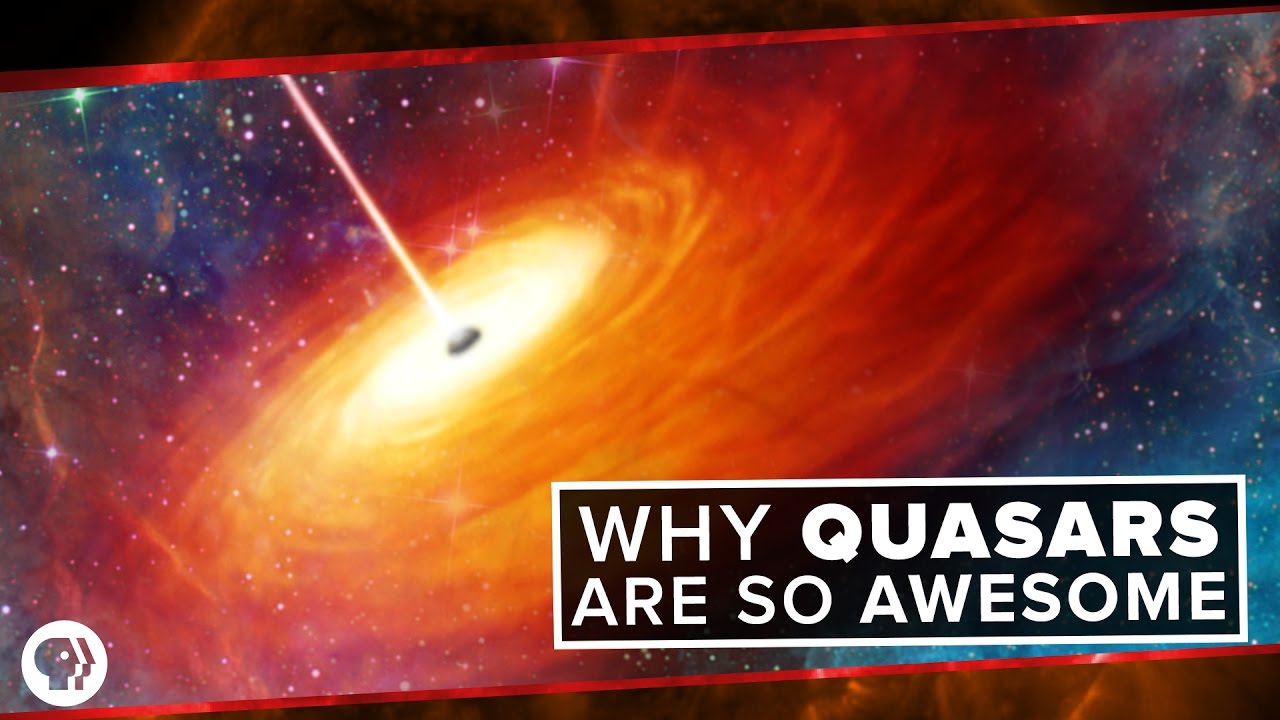
Quasars are extremely luminous active galactic nuclei, powered by supermassive black holes at their centers. They emit vast amounts of energy, often outshining entire galaxies.
Etymology
The term "quasar" is a contraction of "quasi-stellar radio source," reflecting their star-like appearance in early radio observations and their powerful radio emissions.
Example usage
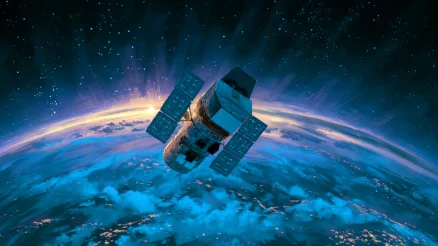
'Astronomers used the Hubble Space Telescope to observe a quasar that is billions of light-years away, providing insights into the early universe.'
Interesting fact
Quasars can emit more energy than all the stars in the Milky Way combined, despite being concentrated in a region no larger than our solar system.
NASA's Imagine the Universe!
Explanation and detail
Formation and Energy Source
Quasars form when gas and dust fall into a supermassive black hole, creating an accretion disk. The friction and gravitational forces within this disk generate intense heat and light, making quasars visible across great distances.
Role in the Universe
Quasars are essential for understanding the early universe. They are among the oldest and most distant objects we can observe, providing clues about galaxy formation and evolution. Their light helps map the intergalactic medium, revealing the distribution of matter in the cosmos.
Detection and Observation
Initially discovered through radio waves, quasars are now observed across the electromagnetic spectrum, including visible light, X-rays, and gamma rays. Modern telescopes continue to uncover new quasars, pushing the boundaries of our cosmic knowledge.
Related video