



- Norwegian writers and musicians reject AI for core creative work as too generic.
- The real threat is employers choosing cheaper AI output over artistic quality.
- Seventy percent of Norwegian artists work freelance, weakening their bargaining position.
Sigurd Oppegaard and Johanne Stenseth Huseby sat down with 17 Norwegian writers and musicians to understand how they were using AI in their work. The answer surprised no one in the room: they barely used AI at all.
The artists weren't technophobes. They had tested the tools, and most of them found AI marginally useful for research, translations, and administrative writing (the tedious periphery of creative work). But for the core work, the actual art-making, they dismissed it.
Not because they feared it, but because they'd tried it and found it inadequate.
The Fafo Institute report, published in January 2026, captures Norwegian creative professionals in a peculiar position.
They know AI can't do what they do. And they're terrified that it won't matter.
Freelance reality
70%
Norwegian artists working freelance or self-employed
The 80/20 Problem
Elin, a screenwriter with years of experience in film and television, explained the disconnect clearly. "I experience my job as 80 percent thinking and 20 percent writing," she told the researchers. "It's mostly thinking time."
AI threatens the wrong 20 percent.
The finding held across nearly all 17 interviews about AI in creative work. Writers and musicians had inevitably encountered generative AI, and concluded it produced work of insufficient quality. Not unusable, but simply not good enough. Generic language, predictable structures, missing the specificity that makes art worth experiencing.
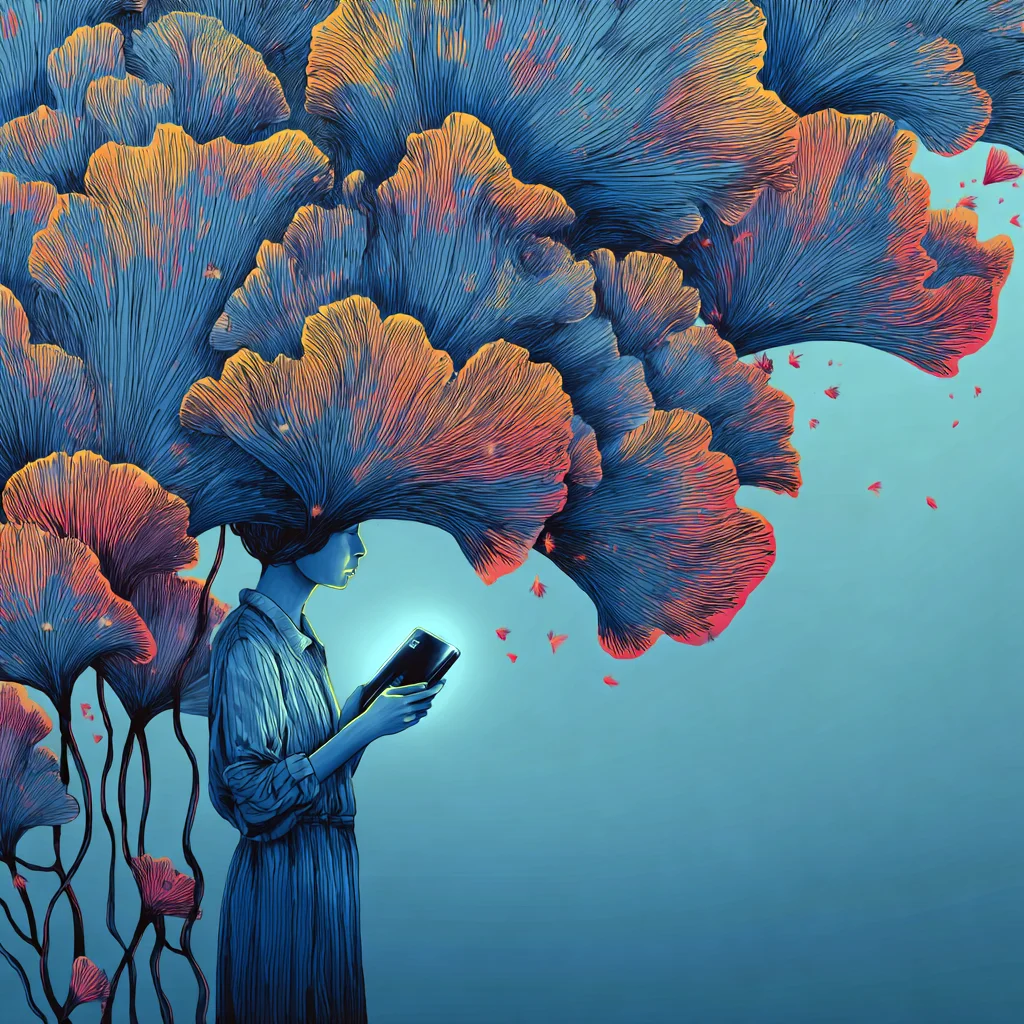
Will AI replace artists who work as writers or musicians? While artists may not fear that AI will create better works than them, clients might still choose to pay less for AI-generated or AI-assisted content. (Science Reader)
Johan, another screenwriter, put it more philosophically: "The whole point of writing is to advance a view of the world. You process reality through your understanding of the world, then you put it on the page and hope people are interested in reading what they get."
That processing, that individual perspective filtered through years of craft, is what AI bypasses entirely.
But the artists' concerns weren't really about AI's limitations. They were about what comes next.
When AI's 'Good Enough' Beats Human Craft
The researchers identified the real threat in a single line: It's not AI that takes the job, but the boss who believes the job can be done by a machine (regardless of how good or bad the machine is).
I experience my job as 80 percent thinking and 20 percent writing. It's mostly thinking time.
Elin, Norwegian screenwriter
This reframes everything. The debate over whether AI can create genuine art becomes secondary to whether commissioners and employers will accept competent-but-uninspired output as good enough.
Elin saw the distinction clearly. "If you're writing episode 178 of Grey's Anatomy, maybe you can use AI for that," she said. "But then [resistance to AI] is really just a fight over jobs, not about creativity or anything like that."
It's not AI that takes the job, but the boss who believes the job can be done by a machine
The implication is important: formulaic work, the stuff that pays bills while artists develop passion projects, becomes AI's most obvious target. Not because AI does it brilliantly, but because nobody particularly cares if episode 178 is brilliant or not.
The Principled and the Pragmatic
Rolf, a literary author with over 40 years of experience, told the researchers he'd "introduced as a principle" that he wants nothing to do with AI. Copyright concerns drove his stance. Training AI on existing works without permission or compensation struck him as fundamentally unacceptable.
More on AI content
The One Thing AI Image Generators Can't Do
They generate endlessly but can't judge what's interesting. New research shows why your taste still matters.
→Others were less absolute. Several writers admitted using AI for synopses, administrative correspondence, preliminary research. Anne, a screenwriter, tried asking AI to shorten a synopsis. The output was enormt dårlig språklig (enormously poor language). Generic and flat. "You become very aware of your own language," she said afterward.
That awareness (recognizing AI's limitations by contrast with human craft) appeared repeatedly in the interviews. Artists weren't discovering AI's potential. They were discovering its boundaries.
The irony runs throughout the report. These artists have tested AI more thoroughly than many of its boosters. They understand its capabilities better than the executives who might eventually use it to replace them. And that understanding provides no protection.
That protection gap for creative work becomes especially stark when viewed against the structural realities of the Norwegian arts economy.
Will AI Replace Artists In Norway Anyway?
The Norwegian creative sector faces structural disadvantages. Seventy percent of artists work freelance or self-employed, compared to over 80 percent permanent employment in the broader workforce. Small, fragmented, operating in a language market of five million speakers.
The researchers noted this creates a weak bargaining position against international AI companies. Norwegian regulatory frameworks around AI and creative work (the incoming DSM Directive implementation, the evolving AI Act guidance) might provide some leverage. But regulatory protection works slowly. Market displacement happens fast.
What is the DSM Directive?
The EU's Digital Single Market Directive governs how AI companies can use copyrighted works for training. Norway is implementing these rules in 2026, requiring opt-in consent for using artistic works in AI datasets.
The musicians in the study worried about illustration and graphic design more than music composition. Not because those fields are less creative, but because visual work translates more easily across language barriers.
If Norwegian illustrators lose work to AI, international AI companies barely notice. If Norwegian authors lose work, the Norwegian publishing ecosystem notices immediately.
Few informants reported actual income losses yet. The threat remains mostly prospective. But Sissel, who works in both writing and illustration, mentioned colleagues in illustration already losing assignments. Not to better work, but to cheaper work.
The question isn't whether AI will match human creativity. The artists in this study believe it won't.
For creative artists, the question is whether the people writing the checks will care about that difference.
Editor's note: While artists may find AI threatening, I believe it is important to embrace generative AI and find ways to use it in creative work. At Science Reader, I employ a technique called "duowriting". Read about our approach to AI assisted, human-directed popular science content at Science Reader.
Sources
- Primary Research: Kunst, kultur og KI (Fafo-rapport 2026:02)
- Additional Context:

Fact Check: Claim-by-Claim Verification Verified
Limits and uncertainties
The core findings on limited AI use, quality critiques, and market fears are clearly supported by the primary Fafo report, a reputable Norwegian research institute.
Artist quotes and exact freelance stats draw from report themes and cited studies.
No hype beyond report's own future uncertainties; few actual job losses yet. Readers should note small qualitative sample limits generalizability; regulatory protections (DSM, AI Act) evolving but implementation pending 2026.
Visual fields like illustration noted as more vulnerable due to language barriers, per report context.
Bottom line
The article accurately conveys the Fafo study's key insights: Norwegian creatives dismiss AI for art due to quality and ethics but fear cost-driven adoption by clients.
Strong primary evidence supports claims, with minor reliance on interpretive quotes.
Fact-checked by Perplexity Sonar Pro on 2026-02-09


