


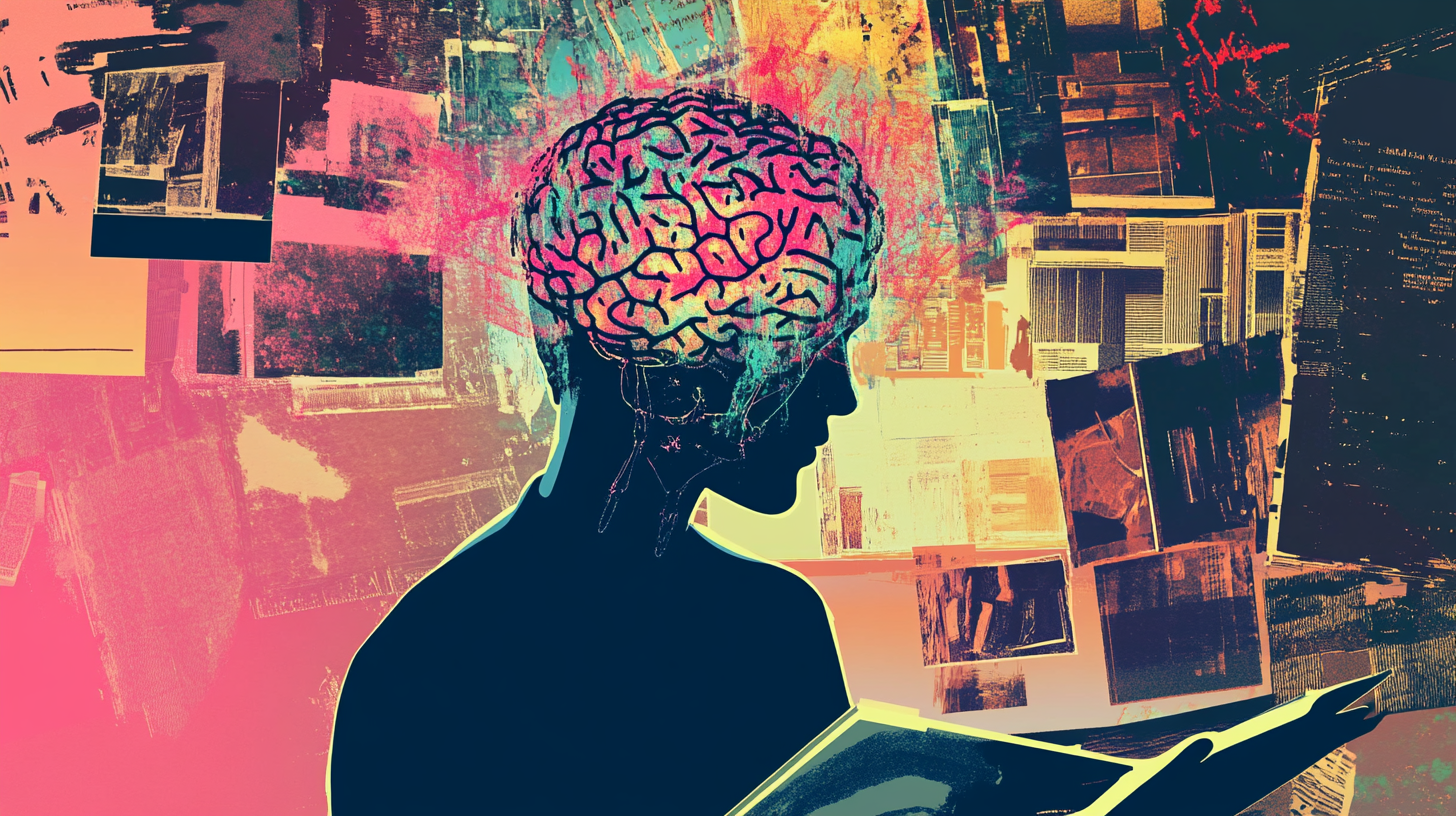

- AI writing tools bypass cognitive processes that build thinking skills.
- Brain plasticity means unused writing skills get physically reassigned.
- Active learning with AI helps, but shortcuts to thinking backfire.
Alice Flaherty has spent two decades studying what happens inside brains that cannot stop writing. Now she is asking a different question: what happens inside brains that stop writing as thinking altogether?
The Harvard neurologist and associate professor of both neurology and psychiatry at Harvard Medical School was one of several faculty members the Harvard Gazette asked about a growing pattern in higher education. Since ChatGPT arrived in 2022, students have been outsourcing their essays to AI at accelerating rates.
Key figure
87%
Of students using AI writing tools report increased cognitive load from verifying AI output (Fyfe, 2023)
The Cognitive Workout Students Are Skipping
Flaherty's concern is rooted in brain plasticity research she knows well from clinical neurology. When people stop practicing a cognitive skill, their brains physically reorganize, reassigning neural territory to other tasks.
Writing, she argues, is not about producing text. It is about producing thought.
Cognitive scientists call this the "testing effect." Actively retrieving and organizing information strengthens learning far more than passively reviewing it. Every time a student wrestles with an uncooperative paragraph, they are building neural pathways for argument construction.
Skip that process, and you skip the construction itself.
AI compounds the problem in a specific way, Flaherty notes. Predictive text draws from the most statistically likely next word. It is, by definition, rehashing ideas already in circulation rather than generating new ones.
What is the testing effect?
The testing effect is a well-established finding in cognitive science. Actively pulling information from memory, rather than simply re-reading it, creates stronger and more durable learning. Writing engages this mechanism because it forces the writer to retrieve, organize, and express ideas from scratch.
When Writing as Thinking Meets Artificial Intelligence
Not everyone at Harvard sees AI writing tools as purely corrosive.
Talia Konkle, a professor of psychology and computational neuroscientist who directs Harvard's Mind Brain Behavior Interfaculty Initiative, draws a distinction that matters. Using AI to shortcut thinking is counterproductive. Using AI to support active learning could deliver real benefits.
The difference is directional. Does the tool replace the cognitive work, or amplify it?
Konkle's own research sits at the intersection of biological and artificial vision systems. She knows both sides of the comparison intimately.
When AI frees up all the neurons that currently are busy at finding the right adjective or trope, what new skills will AI make possible? We can't predict that.
Alice Flaherty, Associate Professor of Neurology and Psychiatry, Harvard Medical School
The Turing Award Winner's Harder Question
Leslie Valiant approaches the problem from computational theory. The Turing Award-winning Harvard computer scientist, whose 2024 book "The Importance of Being Educable" argues that rapid knowledge absorption defines human uniqueness, sees a framing error in the debate.
More On AI Writing

Will AI Replace Artists? Perhaps - Because Clients Might Demand It
A new study reveals creative professionals reject AI for quality reasons but fear employers will accept 'good enough' for less pay.
→Education should not be conceived as competition between humans and machines, he says.
The harder question is more fundamental: what can and should education achieve for humans? Essays may or may not be part of the answer. But the cognitive processes behind them almost certainly are.
Flaherty, characteristically, ends on uncertainty rather than alarm. The brain has always adapted when old skills become obsolete.
The question is whether we will pay attention to what fills the empty space.
Sources
- Primary Source: What good is writing anyway? (Harvard Gazette)
- Additional Context:
- The Importance of Being Educable (Leslie Valiant, Princeton University Press, 2024)
- AI Literacy and Self-Regulated Learning in AI-Supported Higher Education (PMC, 2025)

Fact Check: Claim-by-Claim Verification Verified
All claims verified against the Harvard Gazette article, Fyfe (2023) study, and faculty profiles. Quotes, statistics, and researcher roles confirmed.
Commentary
- The Fyfe study had a small sample from one university; the 87% figure may not generalize.
- Konkle's exact role with MBB Initiative could not be independently confirmed beyond her Harvard psychology professorship.
Sources used for verification
Academic/Peer-reviewed:
- Fyfe (2023), "How to cheat on your final paper: Assigning AI for student writing," AI & Society
Other reliable sources:
- What good is writing anyway? - Harvard Gazette
Fact-checked by Perplexity Sonar Pro on 2026-03-15


