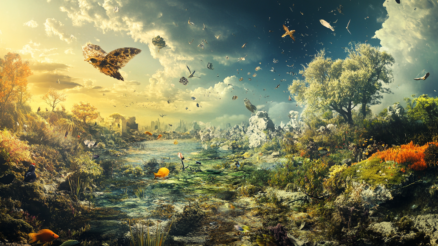
Invasive Species: A $423 Billion Threat to Global Biodiversity
Non-native organisms that harm ecosystems, economies, and health. Over 3,500 species worldwide qualify as harmful invaders.


57 glossary terms
Biology and life sciences cover everything from the molecular machinery inside a single cell to the evolutionary forces that shape whole ecosystems. The terms in this section span genetics, anatomy, microbiology, ecology, and the frontier where biology meets chemistry and computation. Some are classroom staples like the double helix or photosynthesis. Others capture ideas you may never have encountered, from horizontal gene transfer to zygotic gene activation. Together they form the vocabulary scientists use to describe how life works, how it began, and how it continues to surprise us.
Non-native organisms that harm ecosystems, economies, and health. Over 3,500 species worldwide qualify as harmful invaders.
Iterative evolution is the repeated emergence of similar traits from the same ancestral lineage at different points in geological time.
The retrovirus replication cycle converts viral RNA to DNA and integrates it into a host cell's genome to produce new virus particles.
Homeostasis is the set of self-regulating processes by which a living organism maintains stable internal conditions, even as its external environment changes.
Genetic drift is a change in allele frequency within a population caused by random sampling rather than natural selection. It affects every finite population but reshapes small ones fastest, sometimes fixing or eliminating gene variants in just a few generations.
Gut microbiome diversity is the range of microbial species in the human gastrointestinal tract, linked to digestion, immunity, and disease prevention.
De-extinction uses biotechnology to generate organisms resembling extinct species through cloning, gene editing, or selective back-breeding.
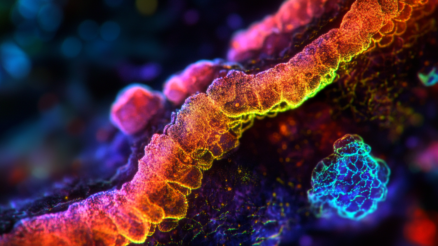
Fluorescence microscopy uses fluorescent molecules to label and visualize specific structures inside biological specimens.
Endosymbiotic theory explains how eukaryotic cells acquired mitochondria and chloroplasts by engulfing free-living bacteria that became permanent, integrated organelles.
Epigenetic inheritance transmits changes in gene expression across generations without altering the DNA sequence, through DNA methylation, histone modification, and small RNA pathways.