Glossary Term

Double Slit Experiment: The Test That Revealed Two Realities
The double slit experiment shows that light and matter behave as both waves and particles. First performed by Thomas Young in 1801, it...

Fluorophore Imaging Techniques: How Glowing Molecules Reveal the Hidden Cell
Fluorophore imaging techniques use fluorescent molecules to make specific biological structures visible under a microscope, letting researchers track proteins, cells, and molecular interactions...

Fermions: The Particles That Build All Matter
Fermions are half-integer spin particles that obey the Pauli exclusion principle, building all ordinary matter.

Fluorescence Microscopy: How Light Reveals the Living Cell
Fluorescence microscopy uses fluorescent molecules to label and visualize specific structures inside biological specimens.

Einstein Ring: How Bent Light Reveals Hidden Mass
An Einstein ring is a circle of light that forms when a distant galaxy sits directly behind a massive foreground object, and its...

Data Quality in AI: Why Better Data Beats Better Models
Data quality in AI measures how accurate, complete, consistent, and representative a dataset is for training and validating machine learning models.
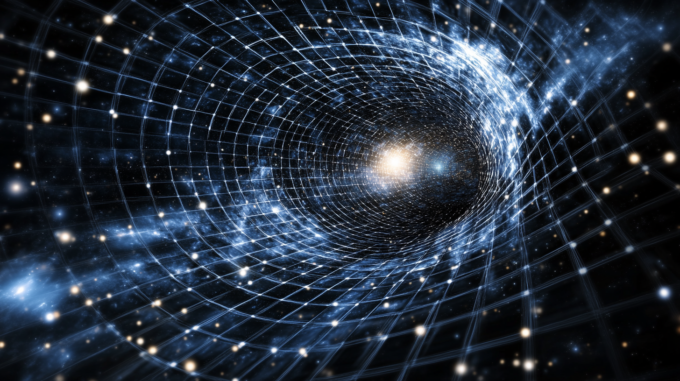
Dark Energy Theoretical Models: How Physicists Explain the Accelerating Universe
Dark energy theoretical models are the mathematical frameworks cosmologists use to explain why the expansion of the universe is accelerating, driven by a...

Fibonacci Numbers: Nature's Hidden Sequence
Fibonacci numbers are integers where each equals the sum of the two before it. The pattern links pure mathematics to nature.

Enzyme Kinetics Models: The Math Behind Every Enzyme
Enzyme kinetics models are mathematical descriptions of how fast enzyme-catalyzed reactions proceed, linking reaction rate to substrate and enzyme concentrations.

Cryo-Electron Microscopy: Seeing Molecules in Frozen Glass
Cryo-electron microscopy (cryo-EM) images biological molecules frozen in vitreous ice, preserving their natural shape and producing 3D structures at near-atomic resolution.