- Three cosmic anomalies now challenge the standard model of cosmology.
- Galaxy structures up to 10 billion light-years defy predictions of cosmic uniformity.
- Two expansion-rate measurements disagree with odds of one in a million.
The universe is misbehaving badly. For the first time in decades, our most fundamental theories about the cosmos are cracking under the weight of new observations that simply don't match what we expected to see.
In a compelling Kurzgesagt video, the team walks through three major problems that have astronomers questioning whether we're heading toward a "cosmic Neptune" moment - where new discoveries refine existing theories - or a "cosmic Mercury" situation that demands completely new physics.
Key figure
10 billion light-years
Length of the largest known galaxy wall – 10% of the entire observable universe
Cosmic Monsters That Shouldn't Exist
The first crack appeared about 15 years ago: impossibly large structures scattered across the universe. A giant arc of galaxies stretching 3 billion light-years. A big ring of galaxies 1.3 billion light-years across. Most shocking of all, a wall of galaxies spanning 10 billion light-years - a whopping 10% of the entire observable universe.
Editors note: Kurzgesagt puts the ring of galaxies at "5 billion light years across". The correct number is 1.3 billion.
These cosmic monsters violate the cosmological principle, our foundational assumption that the universe looks uniform when you zoom out far enough. According to our theories, structures beyond 1 billion light-years should blur into a uniform soup.
If we're wrong about cosmic uniformity, we face a terrifying possibility: everything we see might just be local weirdness, like ants trying to guess the flavor of a cake while sitting on its only cherry.
A Universe Expanding at Two Different Speeds
The second crack emerged about 10 years ago. Two different methods for measuring how fast the universe expands give consistently different answers - like a car speedometer reading 67 while the GPS shows 73.
As measurements become more precise, the disagreement only gets worse. The chance this mismatch is accidental? Less than one in a million.
What is the Hubble tension?
The Hubble tension is the name astronomers give to a stubborn disagreement between two independent ways of measuring how fast the universe is expanding. One method uses the cosmic microwave background – the faint afterglow of the Big Bang – and gives a slower rate. The other uses nearby distance markers like Cepheid stars and supernovae and gives a faster rate. Both methods are precise, yet they disagree, suggesting something may be missing from our picture of the universe.
The universe is literally giving us two different answers to the same question.
Ancient Galaxies in a Baby Universe
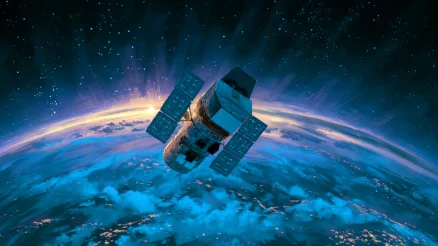
The James Webb Space Telescope delivered the latest surprise after it was launched in 2021. It found bright, massive galaxies dating back to just 280 million years after the Big Bang - far earlier than our theories predict.
These galaxies shouldn't just exist; they're too mature. Some contain heavy elements that require entire generations of stars to live and die first. It's like finding grown-up kids in a kindergarten.
Crisis in science doesn't mean failure - it means the system is working.
The Kurzgesagt team emphasizes that crisis in science doesn't mean failure - it means the system is working. Science progresses through cycles: periods of calm followed by sudden upheaval that leads to revolutionary breakthroughs.
Whether we discover a cosmic Neptune or need to reimagine gravity like Einstein did with Mercury's orbit, one thing is certain: the cosmos is about to get much more interesting.

Fact Check: Claim-by-Claim Verification Verified
All major astronomical claims verified across both independent assessments. Key figures on cosmic structures, Hubble tension values, and JWST discoveries are well-supported by current literature.
Commentary
- The existence of the Hercules-Corona Borealis Great Wall remains debated - some researchers consider it a statistical artifact rather than a coherent structure.
- The Hubble tension is an active area of research; some 2025 studies suggest possible resolution, though consensus still views it as a real discrepancy.
- JWST early galaxy masses are still being refined; initial photometric estimates may overstate true masses.
Sources used for verification
Academic/Peer-reviewed:
- Giant Arc discovery - Science News
- Hubble tension analysis - Astrobites
- JWST distant galaxy discovery - Phys.org
Other reliable sources:
- Largest structure discovered - Space.com
- Big Ring discovery - Space.com
- Big Ring details - Sky & Telescope
- Observable universe - Britannica
- MoM-z14 galaxy - Big Think
Fact-checked by Perplexity Sonar Pro on 2026-03-14