

Nobel Prize Physics

Quantum Entanglement Experiments: From EPR to the Nobel Prize
Quantum entanglement experiments test correlations between particles whose quantum states are linked, confirming that nature violates classical limits. From the 1972 Freedman-Clauser test...

Laser Cooling: How Light Slows Atoms to Near Absolute Zero
Laser cooling uses laser light to reduce atomic motion, lowering temperatures to millionths or billionths of a degree above absolute zero. It enables...

Kinetic Molecular Theory: How Moving Molecules Explain Gases
Kinetic molecular theory explains gas behavior as the result of constant, random molecular motion whose collisions produce pressure and temperature.

Quantum Mechanics: The Physics of Atoms and Subatomic Particles
Quantum mechanics is the branch of physics that describes how matter and energy behave at atomic and subatomic scales, where the rules of...
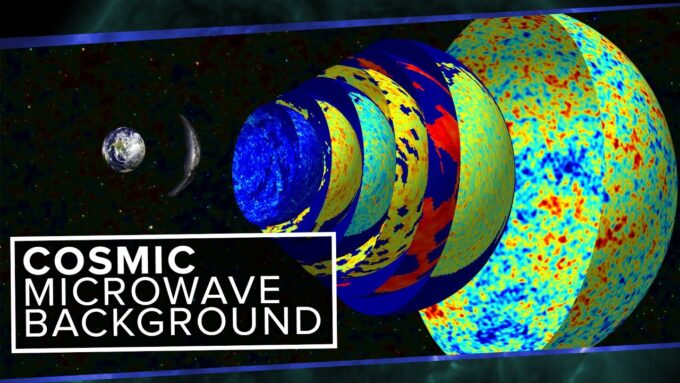
Cosmic Microwave Background: The First Light Ever Released
The cosmic microwave background is thermal radiation released 380,000 years after the Big Bang, the oldest light observable in any direction.

Bose-Einstein Condensate: The Fifth State of Matter Explained
A Bose-Einstein condensate forms when bosons cool to near absolute zero and merge into one quantum state, creating a fifth state of matter...

Brownian Motion: The Random Dance That Proved Atoms Exist
Brownian motion is the irregular, jittering movement of small particles suspended in a liquid or gas, caused by constant collisions with the surrounding...

Quantum Entanglement: How Particles Share a Single Fate
Quantum entanglement is a physical phenomenon in which two or more particles share a single quantum state. Measuring one particle instantly determines the...

Why Entangled Particles Can't Send Messages Faster Than Light
John Clauser tried to prove Einstein right about quantum mechanics. Instead, his 1972 experiment helped establish that entanglement is real - while confirming...


