


- The multiverse theory proposes our universe is one of many, each with different physical laws.
- Hugh Everett's 1957 Many-Worlds Interpretation gave the multiverse scientific footing.
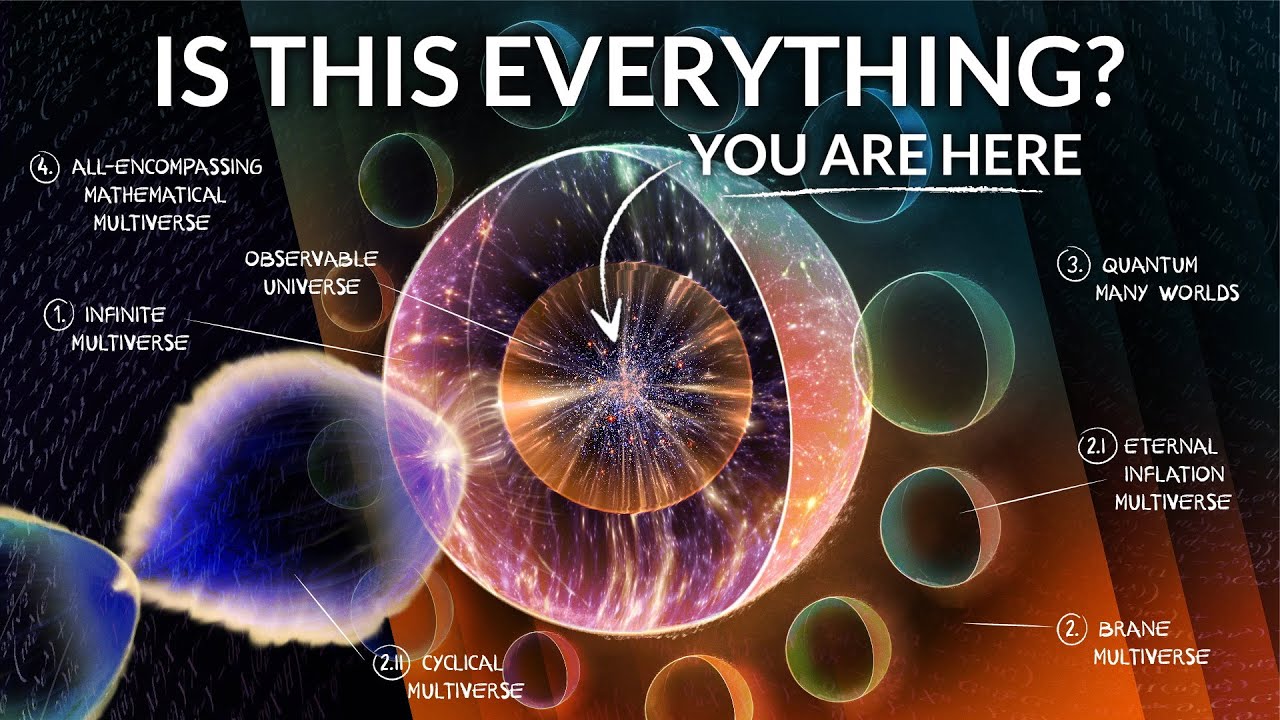
- Scientists have identified four distinct types of proposed multiverse.
Endless parallel worlds of possibilities
Imagine, for a moment, a cosmos where every possibility exists. In one universe, you’re a renowned scientist; in another, an artist. This sounds like a fantasy, but it is a concept deeply rooted in one area of physics: the multiverse theory. It’s a thought-provoking and controversial idea that has tantalized scientists and philosophers for decades.
But what exactly is the multiverse theory, and how did it come into being?
Key figure
4
distinct types of multiverse proposed by scientists
Background of multiverse theories
The idea of a multiverse isn’t new. Philosophers and writers have toyed with the concept of parallel worlds for centuries. However, it wasn’t until the 20th century that this idea found footing in scientific discourse.
- Quantum Mechanics and the Many-Worlds Interpretation: The origins of the modern multiverse theory lie in quantum mechanics, particularly Hugh Everett’s 1957 Many-Worlds Interpretation. Everett proposed that all possible outcomes of quantum measurements are physically realized in some ‘world’ or universe.
- Cosmic Inflation and the Bubble Universes: In the 1980s, the theory of cosmic inflation, pioneered by Alan Guth and others, provided a new twist. It suggested that our universe could be just one of countless bubbles in a vast cosmic foam, each with its own laws of physics.
- String Theory and the Landscape Multiverse: String theory, a candidate for the theory of everything, also points to a multiverse. It proposes a ‘landscape’ of possible universes, each shaped by different configurations of extra dimensions.
What is cosmic inflation?
Cosmic inflation is a theory that the universe underwent an extraordinarily rapid expansion in the first fraction of a second after the Big Bang. This explosive growth smoothed out the early universe and, in some versions of the theory, never fully stopped – meaning new bubble universes could keep forming beyond our own.
What is the Multiverse Theory?
At its core, the multiverse theory posits that our universe is not the only one; rather, it is part of a vast collection of universes, each potentially governed by different physical laws. There are several types of multiverses that scientists have proposed:
- Parallel Universes: Universes similar to ours, with slight differences.
- Bubble Universes: Universes with different physical constants and laws.
- Daughter Universes: Universes that branch off from our own due to quantum events.
- Mathematical Universes: Every mathematical possibility is realized in some universe.
Challenges to the Multiverse Theory
Despite its appeal, the multiverse theory faces significant challenges:
- Lack of Empirical Evidence: The biggest challenge is the lack of direct observational evidence. As of now, we have no way to access or observe these other universes.
- The Problem of Falsifiability: Critics like physicist Paul Steinhardt argue that the multiverse theory is not falsifiable, as it’s impossible to test or disprove.
- Philosophical Implications: The multiverse raises complex philosophical questions about reality, existence, and the nature of science.
Recent Updates in Multiverse Research
The quest to understand the multiverse continues, with several exciting developments:
- Gravitational Wave Echoes: Some scientists hypothesize that collisions between our universe and others might leave behind detectable signs, such as ‘echoes’ in gravitational waves.
- Cosmic Microwave Background (CMB) Analysis: Researchers are examining the CMB for patterns that might suggest interactions with other universes.
- Advancements in String Theory: Ongoing research in string theory might offer indirect evidence supporting the multiverse.
Links to relevant pages
Evil doppelgängers, alternate timelines and infinite possibilities: the physics of the multiverse explained – BBC Science Focus Magazine – a brilliant walk-through of various multiverse theories and their physics.
Multiverse – Wikipedia's entry with a summary of multiverse theories
The Real Science of the Multiverse – JSTOR Daily – a brief explanation of Max Tegmark’s 4 levels of multiverse
Videos on multiverse theories


Fact Check: Claim-by-Claim Verification Verified
Educational overview of multiverse theories. Key attributions verified: Everett's Many-Worlds (1957), Guth's cosmic inflation (1980s), Tegmark's 4 multiverse types, Steinhardt's falsifiability critique.
Commentary
- Educational article covering speculative but legitimate areas of theoretical physics.
- Multiverse theories remain unproven and controversial within physics.
Fact-checked by Perplexity Sonar Pro on 2026-03-15



