
Definition
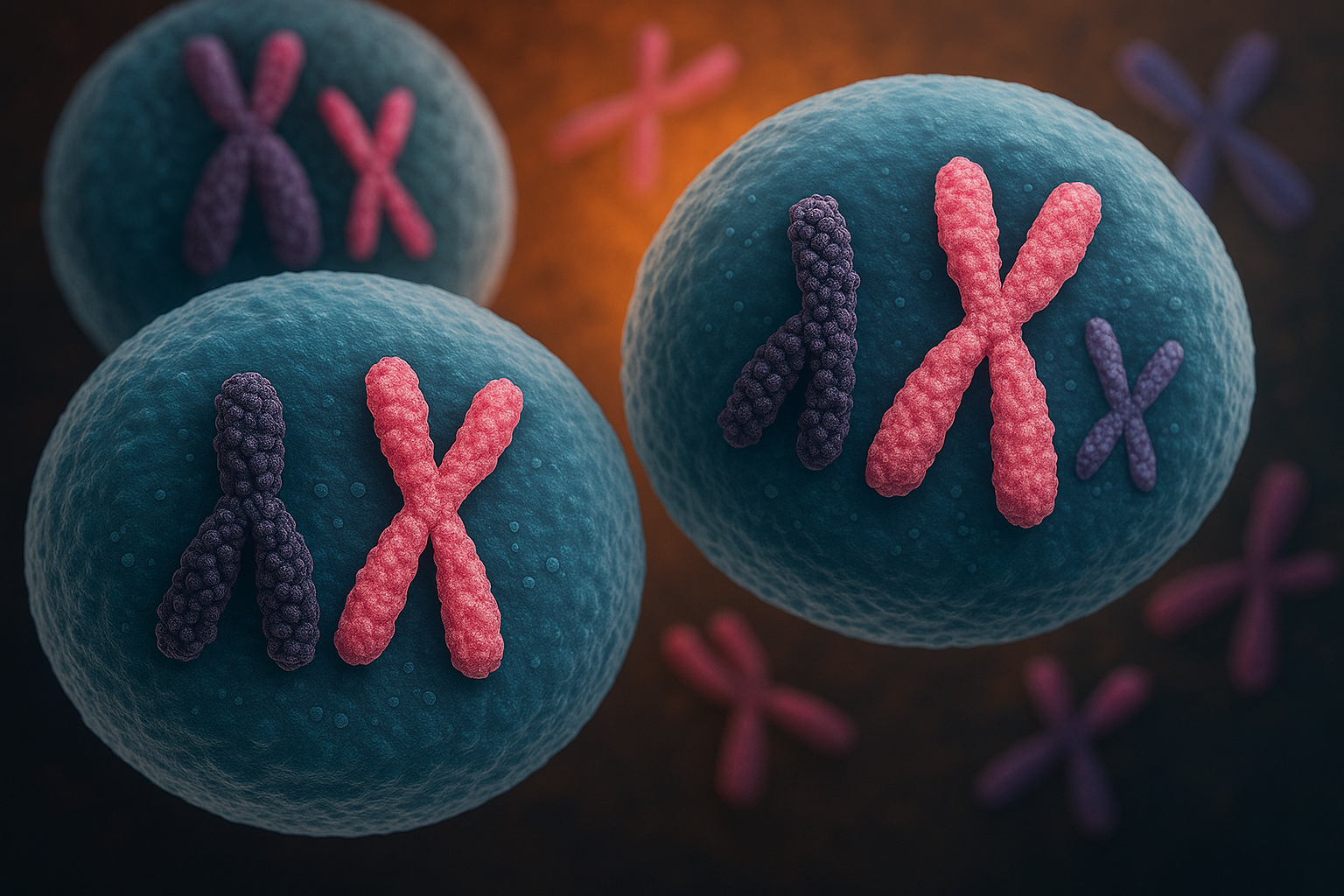
X chromosome inactivation is a biological process in female mammals where one of the two X chromosomes in each cell is randomly silenced. This ensures that females, like males, have one functional copy of the X chromosome in each body cell.
Etymology
The term 'X chromosome inactivation' stems from 'X chromosome,' which refers to one of the two sex chromosomes in many organisms, and 'inactivation,' meaning the process of making something inactive or non-functional. The concept was first proposed by geneticist Mary Lyon in 1961, hence it is also known as 'Lyonization.'
Example Usage
'In female mammals, X chromosome inactivation ensures that gene dosage between males and females is balanced.'
Interesting Fact
Did you know that the visible manifestation of X chromosome inactivation in some animals, like calico cats, results in their distinctive patchwork fur colors? This phenomenon arises because different X chromosomes are inactivated in different cells. Source: "X-linked Gene Expression and Dosage Compensation in Mammals", Nature Reviews Genetics, 2001.
Explanation and Detail
Biological Mechanism
In mammals, females have two X chromosomes while males have one X and one Y chromosome. To prevent females from having double the amount of X-linked gene products, one X chromosome in each cell is randomly inactivated during early embryonic development. This inactivation is achieved through a complex process involving the expression of the XIST gene, which coats the X chromosome and modifies it to become transcriptionally inactive.
Implications
X chromosome inactivation is crucial for normal development and function. It prevents potential toxic effects of having two active X chromosomes by ensuring that gene expression levels are similar in both sexes. However, some genes escape inactivation, which can have implications for understanding certain genetic disorders and diseases that are X-linked.
Related Video