Glossary Term

Nuclear Fusion Reactor Designs: Types, Progress, and Timeline
Nuclear fusion reactor designs are the engineering systems built to confine plasma hot enough for atomic nuclei to fuse and release energy.

Hyperspectral Imaging: Applications in Science, Medicine, and Agriculture
Hyperspectral imaging captures light across hundreds of spectral bands, revealing material compositions invisible to conventional cameras, with applications in agriculture, medicine, and environmental...

Quantum Mechanics: The Physics of Atoms and Subatomic Particles
Quantum mechanics is the branch of physics that describes how matter and energy behave at atomic and subatomic scales, where the rules of...

Massless Particles: Why They Must Travel at Light Speed
Massless particles have zero invariant mass and must travel at the speed of light in vacuum. The photon is the only confirmed example.

Uranium Decay Series: The 14 Steps from Uranium to Lead
The uranium decay series is the chain of 14 radioactive transformations through which uranium-238 converts into stable lead-206.
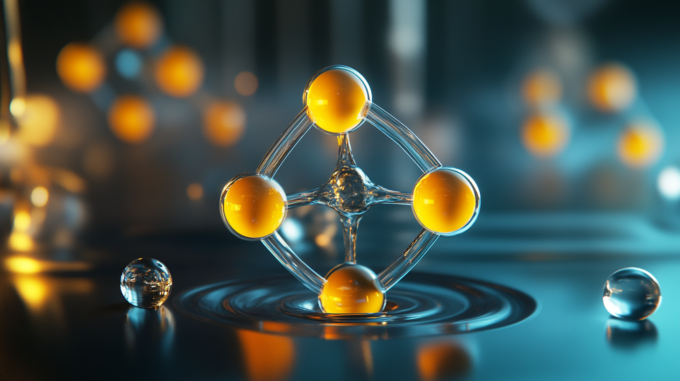
Hydrogen Isotope Fractionation: Climate Clues in Water
Hydrogen isotope fractionation separates hydrogen's isotopes between substances during physical and chemical processes, driven by mass differences.

Interstellar Medium: Gas, Dust, and the Raw Stuff of Stars
The interstellar medium is the gas, dust, and energetic particles filling the space between stars, supplying raw material for new stars and planets.

Isomerism: Why Mirror-Image Molecules Matter
Isomerism describes compounds that share a molecular formula but differ in structure or spatial arrangement, producing distinct chemical and biological properties.

Retrovirus Replication Cycle: How RNA Viruses Hijack Cells
The retrovirus replication cycle converts viral RNA to DNA and integrates it into a host cell's genome to produce new virus particles.
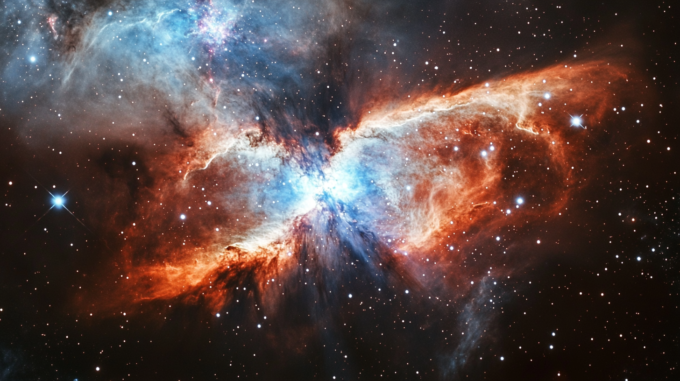
Hubble's Law: The Equation Behind Cosmic Expansion
Hubble's law is the observation that distant galaxies move away from Earth at speeds proportional to their distance.